



Jan
Top Azure Services Every Business Should Leverage in 2026

Cloud adoption is no longer about if businesses should move to the cloud, but how effectively they can use it. As organisations scale, modernise applications, and adopt AI-driven solutions, Microsoft Azure continues to stand out as a flexible and enterprise-ready cloud platform. With hundreds of services available, choosing the right ones becomes critical for long-term success.
This blog explores the top Azure services businesses should leverage in 2026, focusing on real-world value, scalability, and performance—rather than just features.
Why Azure Services Matter for Modern Businesses
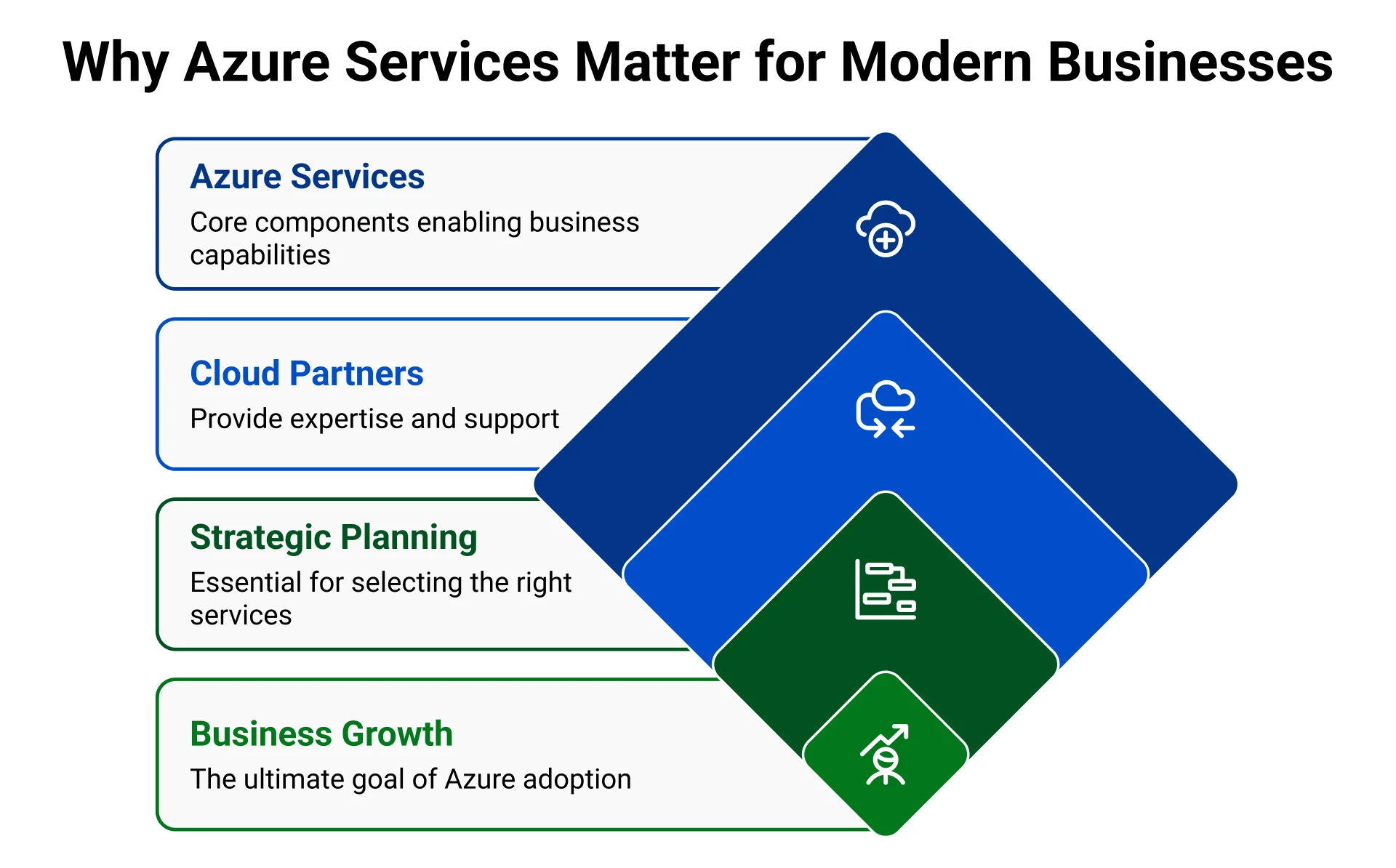
Azure is more than a cloud hosting platform. It enables businesses to build resilient applications, manage data intelligently, improve security, and reduce operational overhead. From startups to enterprises, companies rely on Azure to support hybrid cloud strategies, global scalability, and compliance requirements.
However, the real challenge lies in selecting and integrating the right Azure services based on business goals. A well-architected Azure environment can accelerate growth, while poor choices can increase cost and complexity. This is where strategic planning and experienced cloud partners like Ficode play a vital role.
1. Azure Virtual Machines (VMs)
Azure Virtual Machines remain one of the most widely used Azure services. They allow businesses to run Windows or Linux workloads with full control over the operating system and configuration.
Why it matters in 2026:
- Supports legacy and modern workloads
- Scales easily based on demand
- Ideal for lift-and-shift migrations
Azure VMs are often the first step for businesses moving from on-premises infrastructure to the cloud, especially when modernisation is planned in phases.
2. Azure App Service
Azure App Service is a fully managed platform for building, deploying, and scaling web applications and APIs without worrying about infrastructure management.
Business benefits:
- Faster time-to-market
- Built-in security and compliance
- Auto-scaling for high-traffic applications
For organisations focused on digital experiences and customer-facing platforms, Azure App Service simplifies operations while maintaining performance and reliability.
3. Azure Cloud Services for Containerised Applications
As containerisation becomes the standard for modern application development, Azure cloud services provide powerful capabilities for managing containerised workloads at scale. Azure Kubernetes Service (AKS) plays a central role in orchestrating containers, ensuring high availability, performance, and operational consistency across environments.
Why businesses adopt AKS within Azure cloud services:
- Supports microservices-based application architectures
- Enhances application scalability and fault tolerance
- Integrates seamlessly with CI/CD pipelines for faster deployments
AKS is especially valuable for businesses leveraging Azure cloud services to build cloud-native applications or modernise monolithic systems into scalable, resilient microservices.
4. Azure SQL Database & Azure Cosmos DB
Data is at the heart of digital transformation. Azure provides powerful database services tailored for different workloads.
- Azure SQL Database is ideal for structured, relational data with high availability.
- Azure Cosmos DB supports globally distributed, low-latency NoSQL applications.
Key advantages:
- Automatic backups and patching
- Global scalability
- Enterprise-grade security
Choosing the right data service ensures performance, reliability, and future scalability.
5. Azure AI & Machine Learning Services
AI adoption is accelerating, and Azure’s AI services help businesses embed intelligence into applications without building everything from scratch.
Popular services include:
- Azure Machine Learning
- Cognitive Services
- Azure OpenAI integrations
Business impact:
- Smarter decision-making
- Improved customer experiences
- Automation of repetitive processes
In 2026, AI is no longer optional—it’s a competitive differentiator for digital-first businesses.
6. Azure DevOps
Azure DevOps supports modern software delivery by enabling collaboration across development and operations teams.
Core capabilities:
- CI/CD pipelines
- Source control
- Automated testing
- Agile project management
For organisations aiming to improve release cycles and application quality, Azure DevOps plays a critical role in DevOps maturity.
7. Azure Security Services
Security remains a top concern as businesses expand their cloud footprint. Azure offers a comprehensive security ecosystem to protect applications, data, and infrastructure.
Key services include:
- Azure Defender
- Azure Sentinel
- Azure Active Directory
- Network Security Groups & Firewalls
These services help businesses meet compliance requirements while proactively identifying and mitigating threats.
8. Azure Monitor & Application Insights
Visibility is essential for performance and reliability. Azure Monitor and Application Insights provide real-time insights into system health and application behaviour.
Why businesses rely on them:
- Faster issue detection
- Performance optimisation
- Reduced downtime
Monitoring ensures cloud environments remain stable, cost-efficient, and aligned with business SLAs.
9. Azure Integration Services
Modern businesses depend on multiple systems working together. Azure Integration Services simplify connectivity between applications, data sources, and third-party platforms.
Includes:
- Logic Apps
- API Management
- Service Bus
- Event Grid
These services are essential for building scalable, event-driven, and API-first architectures.
10. Azure Backup & Disaster Recovery Services
Business continuity is critical in an always-on digital environment. Azure provides robust backup and disaster recovery solutions that help organisations protect data, applications, and workloads against unexpected failures, cyberattacks, or natural disasters.
Key services include Azure Backup and Azure Site Recovery, which enable automated backups, quick recovery times, and minimal downtime. These services are especially important for businesses running mission-critical applications that cannot afford data loss or prolonged outages. By implementing a well-planned disaster recovery strategy on Azure, organisations can ensure resilience while meeting compliance and data protection requirements.
11. Azure Cost Management & Governance Services
As cloud environments scale, managing costs and maintaining control becomes increasingly important. Azure Cost Management and governance tools help businesses track usage, optimise spending, and enforce policies across cloud resources.
With features like cost analysis, budget alerts, and Azure Policy, organisations gain visibility into where money is being spent and how resources are being used. Proper governance ensures that cloud adoption remains efficient and aligned with business goals. For growing companies, cost optimisation on Azure is not just about saving money it’s about maximising return on cloud investment.
How to Choose the Right Azure Services
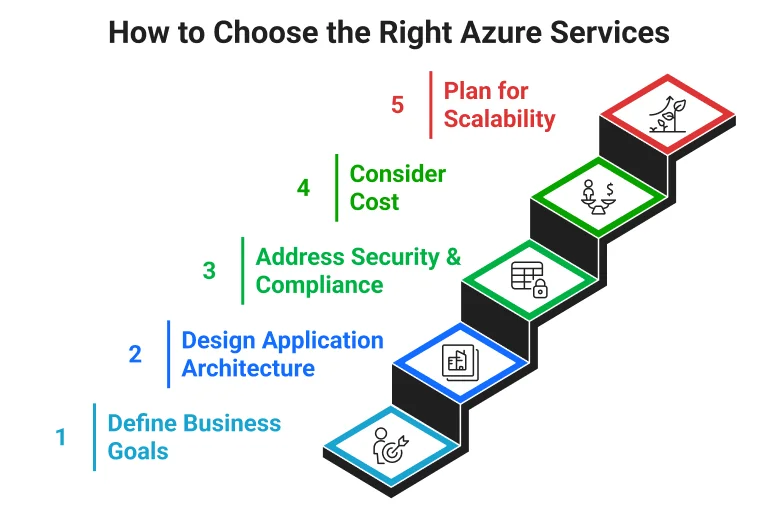
Not every Azure service is right for every business. Selection depends on:
- Business goals
- Application architecture
- Security and compliance needs
- Cost considerations
- Future scalability plans
This is where strategic cloud consulting becomes essential. At Ficode, Azure services are aligned with business objectives not just technical requirements ensuring long-term value and measurable outcomes.
Final Thoughts
Microsoft Azure offers a powerful ecosystem of services, but success depends on how effectively they are used. From compute and data to AI, security, and integration, the right Azure services can transform how businesses operate in 2026 and beyond.
By focusing on business impact rather than just tools, organisations can unlock scalability, resilience, and innovation. With the right planning and execution, Azure becomes not just a cloud platform but a foundation for digital growth.

Nihal Rajput is the Operations Director at Ficode Software Solutions Pvt. Ltd., where he oversees day-to-day operations, streamlines processes, and drives organisational efficiency. With a focus on delivering scalable solutions and maintaining operational excellence, he plays a key role in aligning teams, optimising resources, and ensuring client satisfaction as the company grows.

 Previous
 Next
Next