


Aug
IoT in Logistics: Real-Time Tracking and Fleet Optimisation
The logistics industry is undergoing a massive transformation driven by data, connectivity, and automation. At the heart of this shift lies IoT in Logistics, enabling companies to gain real-time visibility, improve operational efficiency, and reduce costs. From tracking shipments across continents to optimising fleet performance, IoT is redefining how modern supply chains operate.
As businesses increasingly adopt logistics IoT solutions, the focus is no longer just on moving goods – it’s about moving them smarter, faster, and more efficiently.
What is IoT in Logistics?
IoT in Logistics refers to the use of connected devices such as sensors, GPS trackers, and smart systems to collect and transmit data across the supply chain. These devices enable logistics companies to monitor vehicles, shipments, and environmental conditions in real time.
Through effective IoT implementation in logistics, organisations can connect physical assets to digital platforms, creating a seamless flow of information. This connectivity allows businesses to make faster decisions, reduce delays, and enhance overall supply chain visibility.
The Role of IoT in Real-Time Shipment Tracking
One of the most impactful applications of IoT is real-time shipment tracking. Traditional tracking systems often provide limited updates, leaving businesses and customers uncertain about delivery timelines. IoT changes this by offering continuous, live updates.
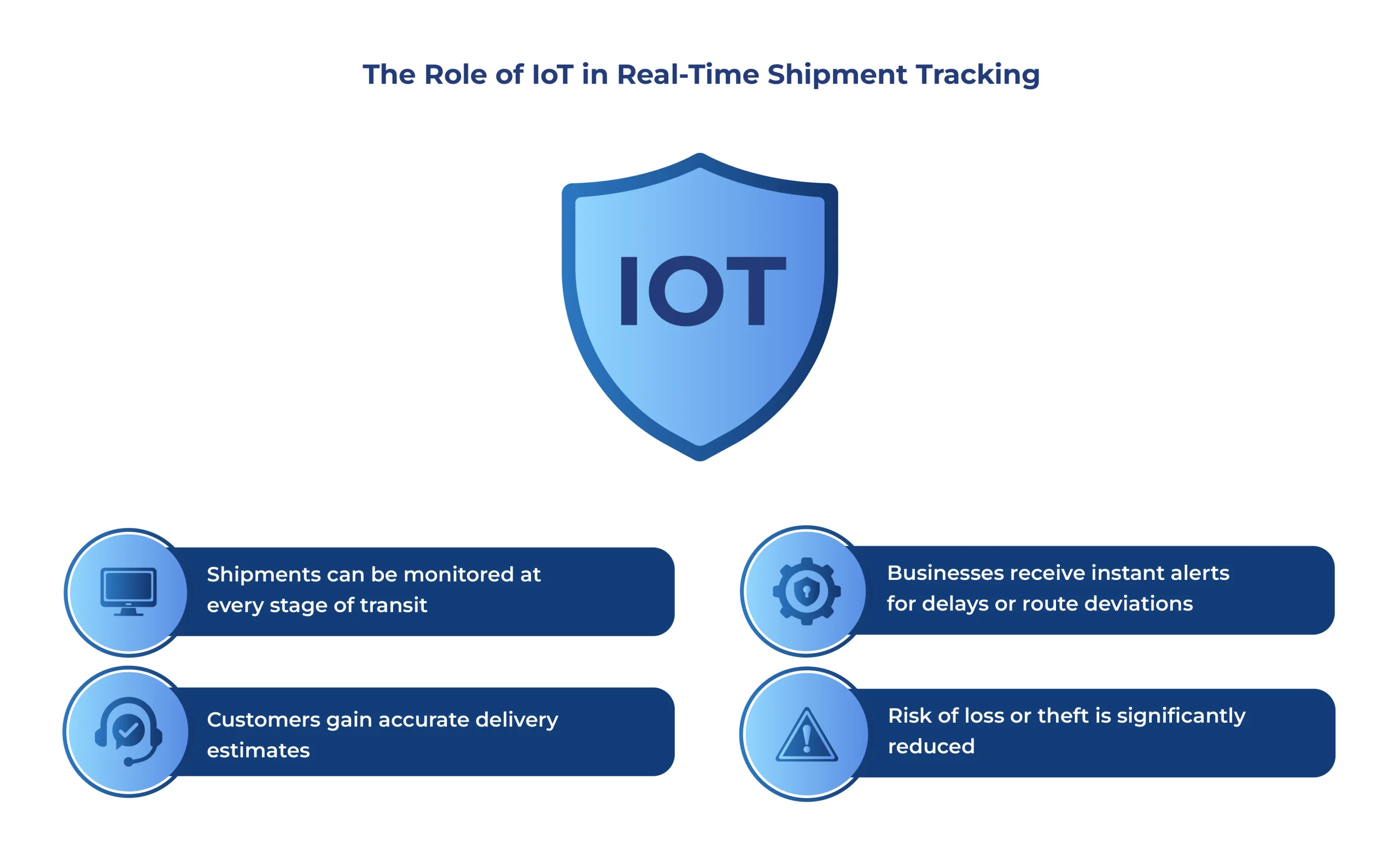
With IoT-enabled tracking systems:
- Shipments can be monitored at every stage of transit
- Businesses receive instant alerts for delays or route deviations
- Customers gain accurate delivery estimates
- Risk of loss or theft is significantly reduced
Real-time data empowers logistics managers to proactively address issues before they escalate. This level of transparency not only improves operational efficiency but also enhances customer satisfaction.
Fleet Optimisation with IoT
Fleet management is a critical component of logistics operations, and IoT plays a key role in optimising it. By using connected devices and sensors, companies can monitor vehicle performance, driver behaviour, and route efficiency.
Key Benefits of IoT in Fleet Optimisation
- Route Optimisation
IoT systems analyse traffic patterns, weather conditions, and road data to suggest the most efficient routes. This reduces fuel consumption and ensures timely deliveries. - Predictive Maintenance
Sensors installed in vehicles monitor engine health, tyre pressure, and other critical parameters. This enables predictive maintenance, reducing unexpected breakdowns and downtime. - Fuel Efficiency
IoT helps track fuel usage and identify inefficiencies. Businesses can implement strategies to minimise fuel wastage and lower operational costs. - Driver Safety Monitoring
Driver behaviour such as speed, braking, and idle time can be tracked. This helps improve safety standards and reduces the risk of accidents.
By integrating these capabilities, logistics IoT solutions enable companies to operate smarter fleets with higher reliability and lower costs.
Digital Transformation in Logistics Through IoT
The rise of IoT is a major driver of digital transformation in logistics. It is not just about adopting new technology – it’s about reshaping the entire logistics ecosystem.
How IoT Drives Digital Transformation
Enhanced Visibility
IoT provides end-to-end visibility across the supply chain, enabling better planning and coordination.
Data-Driven Decision Making
With real-time insights, businesses can make informed decisions quickly, improving responsiveness and efficiency.
Automation of Processes
Manual processes such as inventory tracking and route planning can be automated, reducing human error and increasing productivity.
Improved Customer Experience
Accurate tracking, timely deliveries, and proactive communication lead to higher customer satisfaction.
Digital transformation powered by IoT allows logistics companies to stay competitive in a rapidly evolving market.
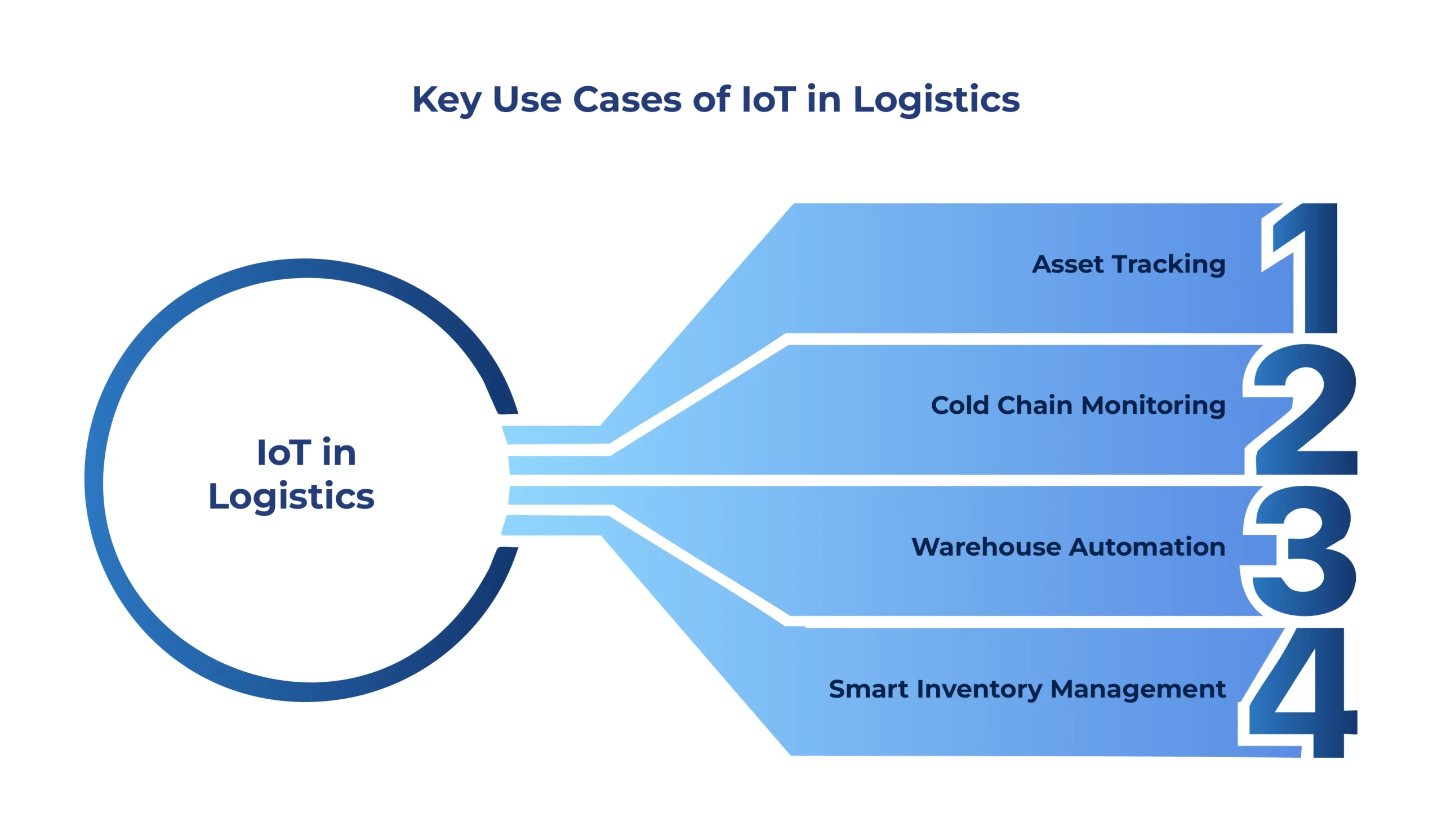
Key Use Cases of IoT in Logistics
1. Asset Tracking
IoT devices help track valuable assets such as containers, pallets, and equipment. This reduces loss and improves utilisation.
2. Cold Chain Monitoring
For industries like pharmaceuticals and food, maintaining specific temperature conditions is crucial. IoT sensors ensure that goods remain within safe temperature ranges throughout transit.
3. Warehouse Automation
IoT enables smart warehouses with automated inventory management, reducing manual intervention and increasing accuracy.
4. Smart Inventory Management
Real-time data helps businesses maintain optimal inventory levels, avoiding overstocking or stockouts.
These use cases highlight how IoT implementation in logistics is transforming every aspect of the supply chain.
Challenges in Implementing IoT in Logistics
While the benefits are significant, implementing IoT comes with its own set of challenges.
1. High Initial Investment
Deploying IoT infrastructure requires upfront investment in devices, software, and integration.
2. Data Security Concerns
With large volumes of data being transmitted, ensuring data security and privacy becomes critical.
3. Integration Complexity
Integrating IoT systems with existing logistics platforms can be complex and time-consuming.
Scalability Issues
As operations grow, scaling IoT systems efficiently can be challenging without proper planning.
Despite these challenges, the long-term benefits of adopting IoT in Logistics far outweigh the initial hurdles.
Future of IoT in Logistics
The future of logistics is deeply connected with IoT advancements. Emerging technologies such as AI, machine learning, and edge computing are further enhancing IoT capabilities.
In the coming years, we can expect:
- Autonomous delivery systems powered by IoT
- Advanced predictive analytics for supply chain optimisation
- Increased use of smart sensors for enhanced tracking
- Greater integration with AI-driven logistics platforms
As innovation continues, real-time shipment tracking and intelligent fleet management will become standard practices rather than competitive advantages.
Final Thoughts
The adoption of IoT in Logistics is no longer optional – it is a necessity for businesses aiming to stay competitive in a fast-paced, data-driven world. From improving visibility to enabling real-time decision-making, IoT is transforming logistics operations at every level.
Companies that invest in robust logistics IoT solutions can achieve greater efficiency, reduce operational costs, and deliver superior customer experiences.
At Ficode, we help businesses accelerate their digital transformation in logistics by building scalable and customised IoT solutions tailored to their operational needs. If you’re looking to implement IoT in your logistics operations, now is the time to take the next step toward smarter, more connected supply chains.

Nihal Rajput is the Operations Director at Ficode Software Solutions Pvt. Ltd., where he oversees day-to-day operations, streamlines processes, and drives organisational efficiency. With a focus on delivering scalable solutions and maintaining operational excellence, he plays a key role in aligning teams, optimising resources, and ensuring client satisfaction as the company grows.

 Previous
 Next
Next