


Aug
AWS Cloud Migration Checklist: Everything You Need Before Moving
Cloud migration often starts with a simple goal – move to AWS, scale faster, and reduce costs.
But in reality, many businesses underestimate what it takes. Unexpected downtime, security gaps, and rising cloud bills are common when migration is rushed or poorly planned.
A successful AWS cloud migration isn’t just about moving data or applications – it’s about making the right decisions before the move even begins.
This checklist is designed to help you prepare every critical aspect, so your migration to AWS is smooth, secure, and cost-effective.
Why You Need a Cloud Migration Checklist
Cloud migration isn’t just about shifting workloads – it’s about rethinking how your applications, data, and infrastructure operate.
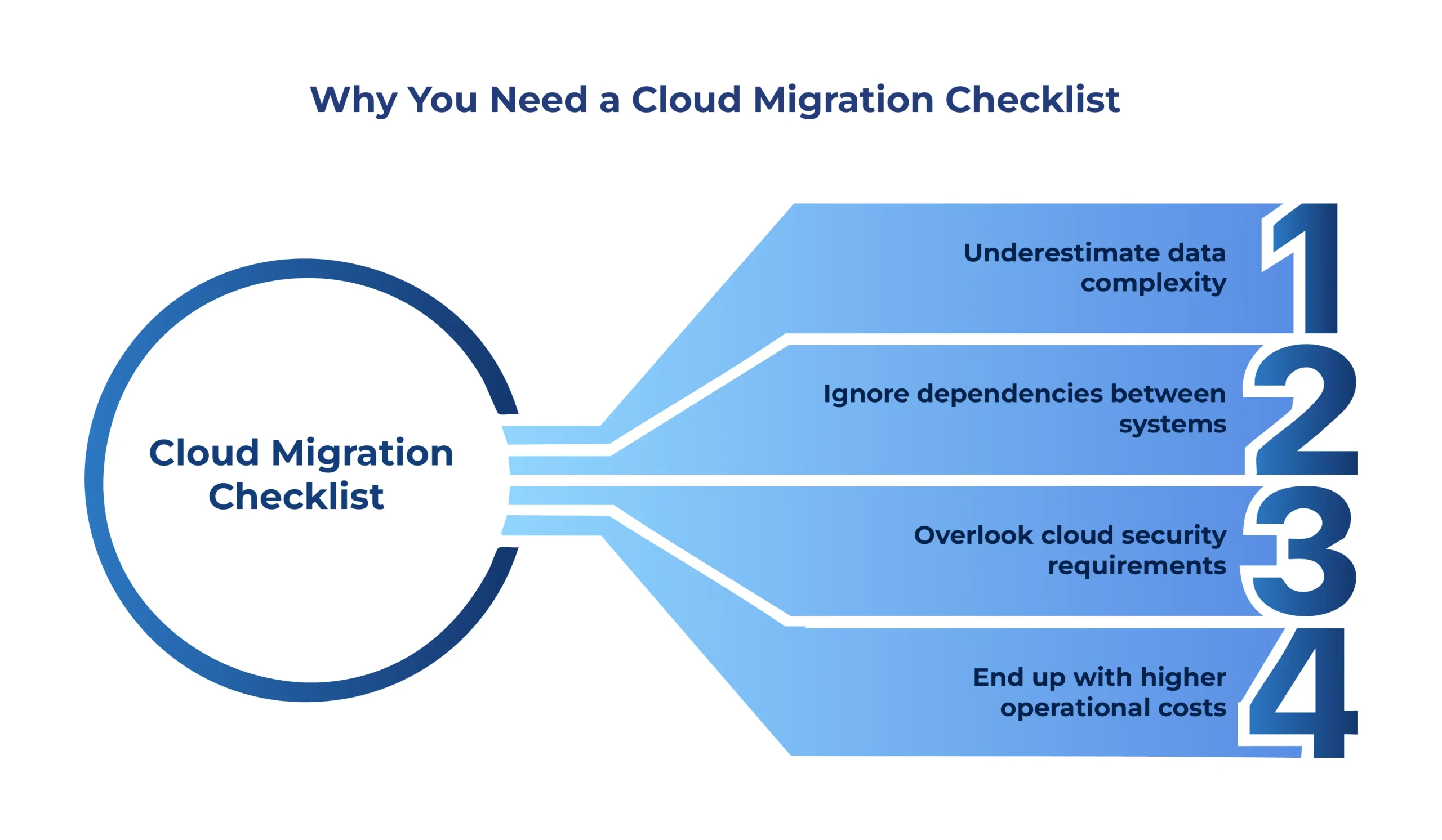
Without proper AWS migration planning, businesses often:
-
Underestimate data complexity
-
Ignore dependencies between systems
-
Overlook cloud security requirements
-
End up with higher operational costs
A clear AWS cloud migration checklist ensures your move is strategic, not reactive.
Step-by-Step AWS Cloud Migration Checklist
1. Define Your Migration Goals
Start with clarity. Why are you moving to AWS?
Your goals will shape your entire AWS migration strategy. Common objectives include:
-
Reducing infrastructure costs
-
Improving scalability and performance
-
Enhancing security and compliance
-
Supporting digital transformation initiatives
Without defined goals, your migration process can quickly lose direction.
2. Assess Your Current Infrastructure
Before you migrate to AWS cloud, you need a complete view of your existing environment.
This includes:
-
Applications and workloads
-
Databases and storage systems
-
Network configurations
-
Third-party integrations
A proper cloud readiness assessment helps identify what can be moved as-is and what needs modification.
3. Choose the Right Migration Strategy
Not all applications should be migrated the same way. Your approach depends on business needs and technical complexity.
Common strategies include:
-
Lift and shift migration
Move applications without major changes. Fast but may not be cost-efficient long term. -
Replatforming
Make minor optimisations without changing core architecture. -
Refactoring
Redesign applications for cloud-native benefits like scalability and resilience.
Choosing the right approach is a critical part of your cloud migration strategy.
4. Plan Your Data Migration
Data is often the most complex part of any AWS data migration strategy.
Key considerations:
-
Data volume and transfer speed
-
Data integrity and validation
-
Downtime requirements
-
Backup and recovery plans
You’ll also need to prepare for data migration challenges such as latency, compatibility issues, and potential data loss.
5. Evaluate Security and Compliance Requirements
Security cannot be an afterthought.
When planning cloud security in AWS, focus on:
-
Identity and access management (IAM)
-
Data encryption (at rest and in transit)
-
Compliance requirements (GDPR, HIPAA, etc.)
-
Network security configurations
A secure foundation ensures your migration doesn’t introduce vulnerabilities.
6. Estimate Costs and Optimise Budget
One of the biggest misconceptions about cloud is that it’s always cheaper.
Without planning, costs can spiral. As part of your AWS migration planning, evaluate:
-
Compute and storage requirements
-
Data transfer costs
-
Licensing and third-party tools
Proper cloud cost optimisation in AWS helps you avoid over-provisioning and unexpected expenses.
7. Identify Risks and Dependencies
Every migration carries risk.
A thorough migration risk assessment should cover:
-
Application dependencies
-
Downtime impact
-
Rollback strategies
-
Performance issues post-migration
This step is especially important when dealing with legacy system migration, where outdated architectures can create complications.
8. Build a Migration Roadmap
Once everything is assessed, create a clear execution plan.
Your AWS migration process should include:
-
Migration phases (pilot, testing, full migration)
-
Timeline and milestones
-
Resource allocation
-
Roles and responsibilities
A structured roadmap ensures your migration stays on track.
9. Choose the Right AWS Tools
AWS offers several tools to simplify migration. Using the right ones can save both time and effort.
Some commonly used options include:
-
AWS Migration Hub for tracking progress
-
AWS Transform MGN
-
AWS Database Migration Service for data transfer
These tools support a smoother and more efficient AWS application migration process.
10. Test Before and After Migration
Testing is often rushed but it’s one of the most critical steps.
You should validate:
-
Application performance
-
Data accuracy
-
Security configurations
-
Integration functionality
Testing ensures your systems work as expected after moving to the cloud.
11. Plan for Post-Migration Optimisation
Migration doesn’t end once everything is live.
To get the most out of AWS, you need continuous improvement:
-
Monitor performance and usage
-
Optimise resource allocation
-
Improve scalability
-
Strengthen security
This is where real long-term value from AWS cloud migration is achieved.
Common Mistakes to Avoid
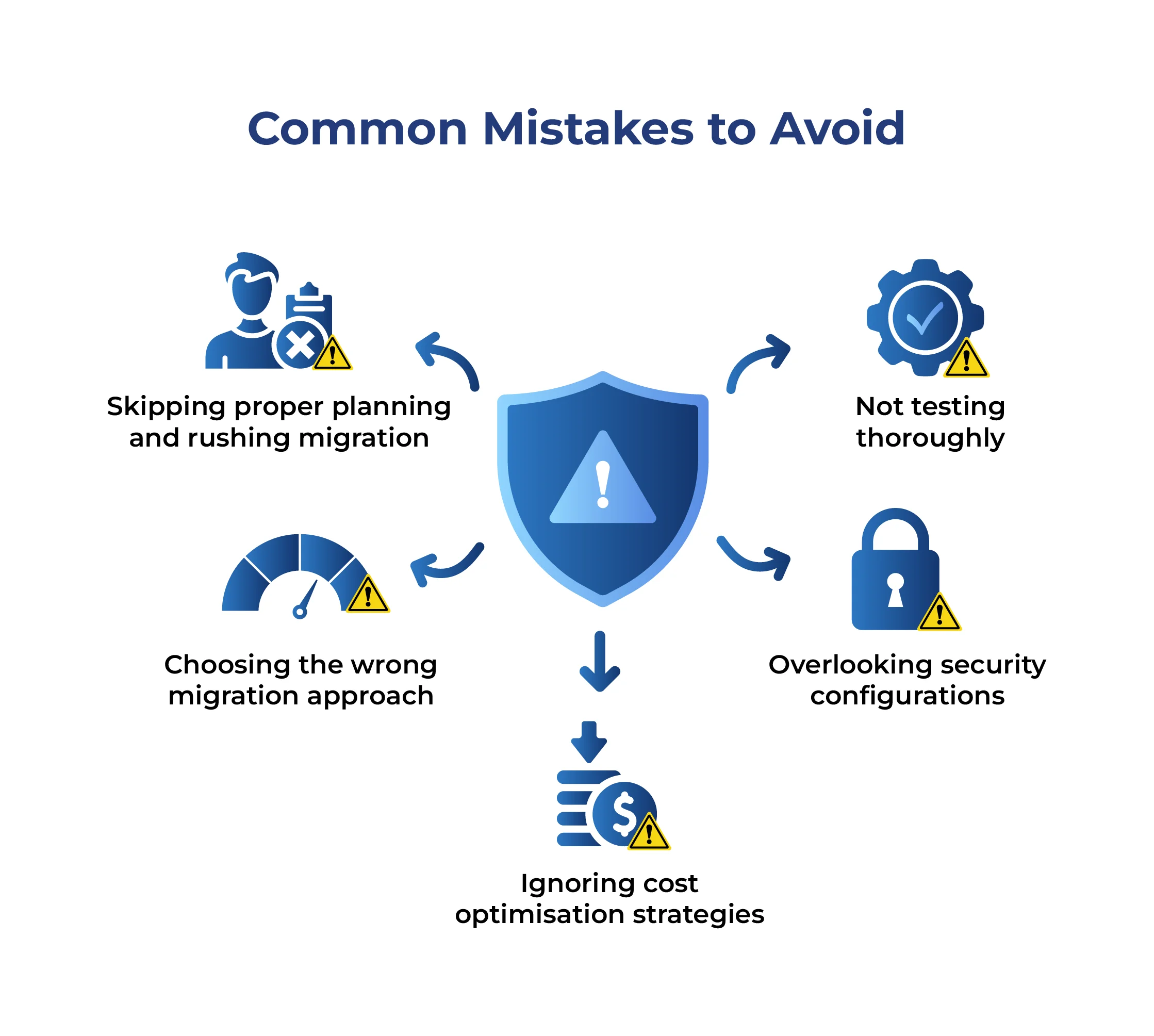
Even with a checklist, some mistakes are surprisingly common:
-
Skipping proper planning and rushing migration
-
Choosing the wrong migration approach
-
Ignoring cost optimisation strategies
-
Overlooking security configurations
-
Not testing thoroughly
Avoiding these pitfalls can save significant time, cost, and effort.
Final Thoughts
A successful AWS cloud migration isn’t about moving quickly it’s about moving strategically.
With the right checklist in place, businesses can minimise risks, optimise costs, and ensure a seamless transition to the cloud. From defining clear goals to planning post-migration optimisation, every step contributes to long-term success and scalability.
If you’re planning your move to AWS and want to get it right from the start, working with an experienced team can make all the difference. At Ficode we help businesses plan, execute, and optimise their cloud journey with tailored AWS migration strategies that align with real business goals. Whether you’re starting fresh or modernising existing systems, the right guidance can make your migration faster, safer, and more cost-effective.

Nihal Rajput is the Operations Director at Ficode Software Solutions Pvt. Ltd., where he oversees day-to-day operations, streamlines processes, and drives organisational efficiency. With a focus on delivering scalable solutions and maintaining operational excellence, he plays a key role in aligning teams, optimising resources, and ensuring client satisfaction as the company grows.

 Previous
 Next
Next