


Mar
What Makes the Best API Integration? A Complete Guide for Businesses

In today’s digital landscape, businesses rely on a variety of software tools to manage operations, serve customers, and make informed decisions. However, these systems can only work efficiently when they communicate well with each other. This is where API integration becomes essential. With the right approach, companies can automate workflows, eliminate manual errors, and create a seamless data ecosystem. But what truly defines the best API integration, and how can businesses identify the right solution?
This guide explains what makes an integration effective, what to look for, and how the right strategy can support your long-term growth.
Understanding API Integration
API (Application Programming Interface) integration involves connecting two or more software applications so they can share data and perform actions automatically. Instead of manually transferring information between platforms, APIs allow systems to exchange data in real time.
For example:
- When a customer fills out a form on your website, the information moves instantly to your CRM.
- When a payment is processed, your accounting or ERP system updates without human involvement.
This seamless data flow is the result of a strong, well-built API integration.
What Defines the Best API Integration?
Not all integrations are equally effective. The best API integration is one that aligns with your operational needs, supports business goals, and ensures reliability over time. Below are the core characteristics that make an integration truly valuable.
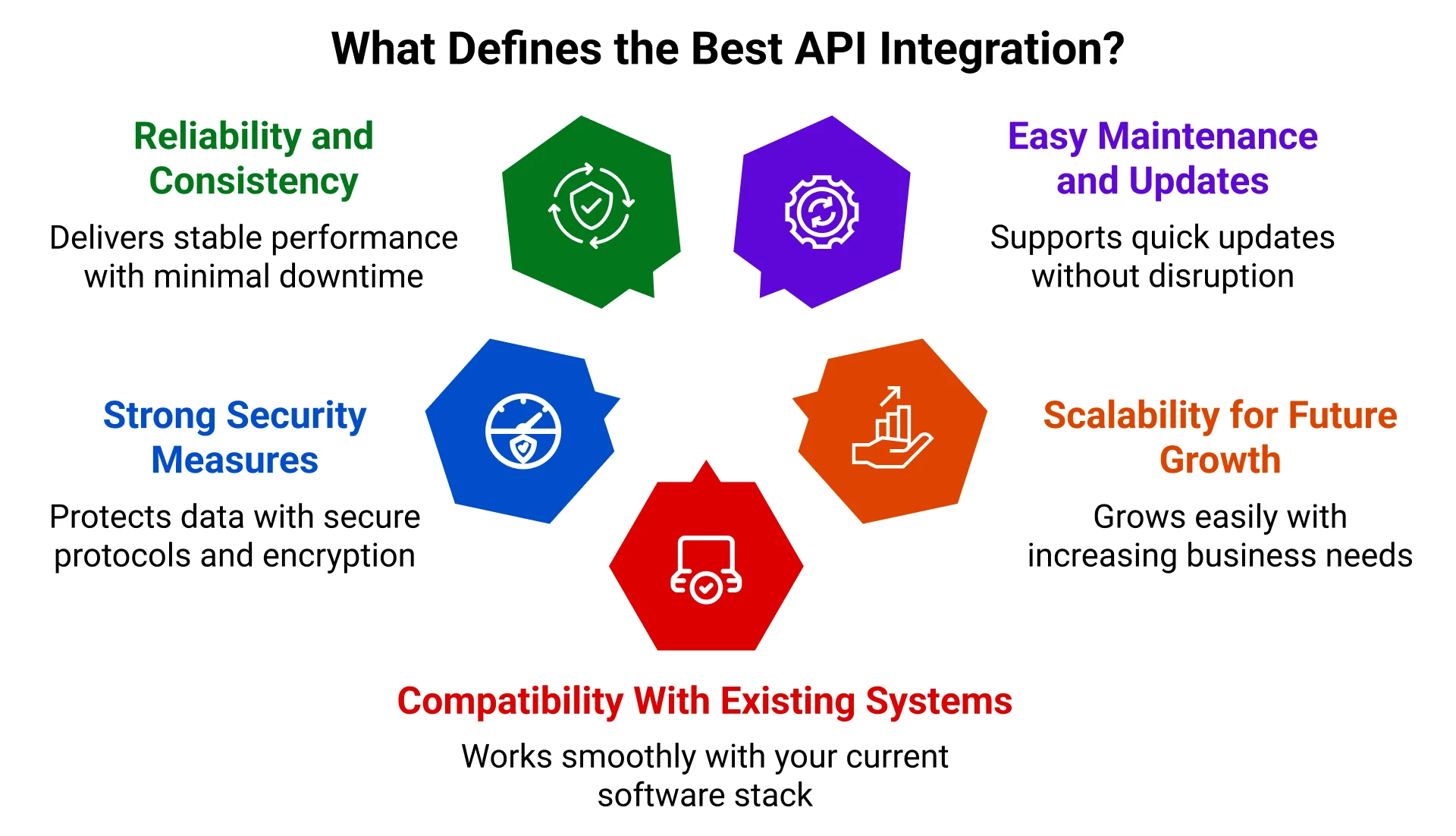
1. Reliability and Consistency
A successful integration must perform consistently without frequent failures. Reliable APIs ensure business operations run smoothly, reduce downtime, and prevent disruptions that impact productivity.
2. Strong Security Measures
Security is a critical factor. High-quality integrations follow advanced security protocols such as HTTPS, OAuth, and data encryption. This protects sensitive information such as customer data, financial records, and internal communication.
3. Compatibility With Existing Systems
The best integrations work naturally with your current software. Whether you use cloud applications, on-premise solutions, or custom tools, compatibility ensures systems can communicate without conflict.
4. Scalability for Future Growth
As your business expands, your integration should grow with it. Scalable solutions support additional data volumes, new endpoints, and more applications without requiring a complete rebuild.
5. Easy Maintenance and Updates
APIs evolve over time. A well-designed integration should allow easy updates and adjustments without causing disruptions. This ensures long-term usability and reduces maintenance costs.
Why Strong API Integration Matters for Businesses
Businesses depend on efficient data flow to make decisions and operate effectively. Without integration, software systems work in isolation, creating silos that slow down processes.
High-quality API integrations offer several benefits:
Enhanced Operational Efficiency
Automated data exchange reduces manual effort, decreases errors, and speeds up routine tasks. Teams can focus on strategic initiatives instead of time-consuming administrative work.
Improved Customer Experience
With connected systems, customer information stays updated across all platforms. This results in faster support responses, more personalised communication, and better overall service.
Access to Real-Time Insights
Integrated systems provide accurate, unified data. This allows managers and decision-makers to monitor performance, track trends, and take timely actions.
Cost Savings Through Automation
By eliminating repetitive tasks and reducing human errors, API integration helps businesses cut operational costs and improve productivity.
Types of API Integration Services
Businesses can choose from different API integration services based on their needs and technical complexity.
1. Pre-Built Integrations
These are ready-to-use connectors designed for common platforms like Shopify, Salesforce, or Stripe. They are cost-effective and quick to deploy but may not offer advanced customisation.
2. Custom API Integration
When businesses need deeper connectivity or have unique workflows, custom API integration is the ideal option. Developers build tailored solutions that align with specific requirements, offering full flexibility and better control.
3. Third-Party Integration Platforms
Tools like Zapier or Make.com help create basic integrations without heavy coding. They are suitable for simple tasks but may not support large-scale or complex operations.
How to Choose the Right Integration for Your Business
Selecting the best integration requires a clear understanding of your business processes and technical environment. The following steps can help in making a well-informed choice:
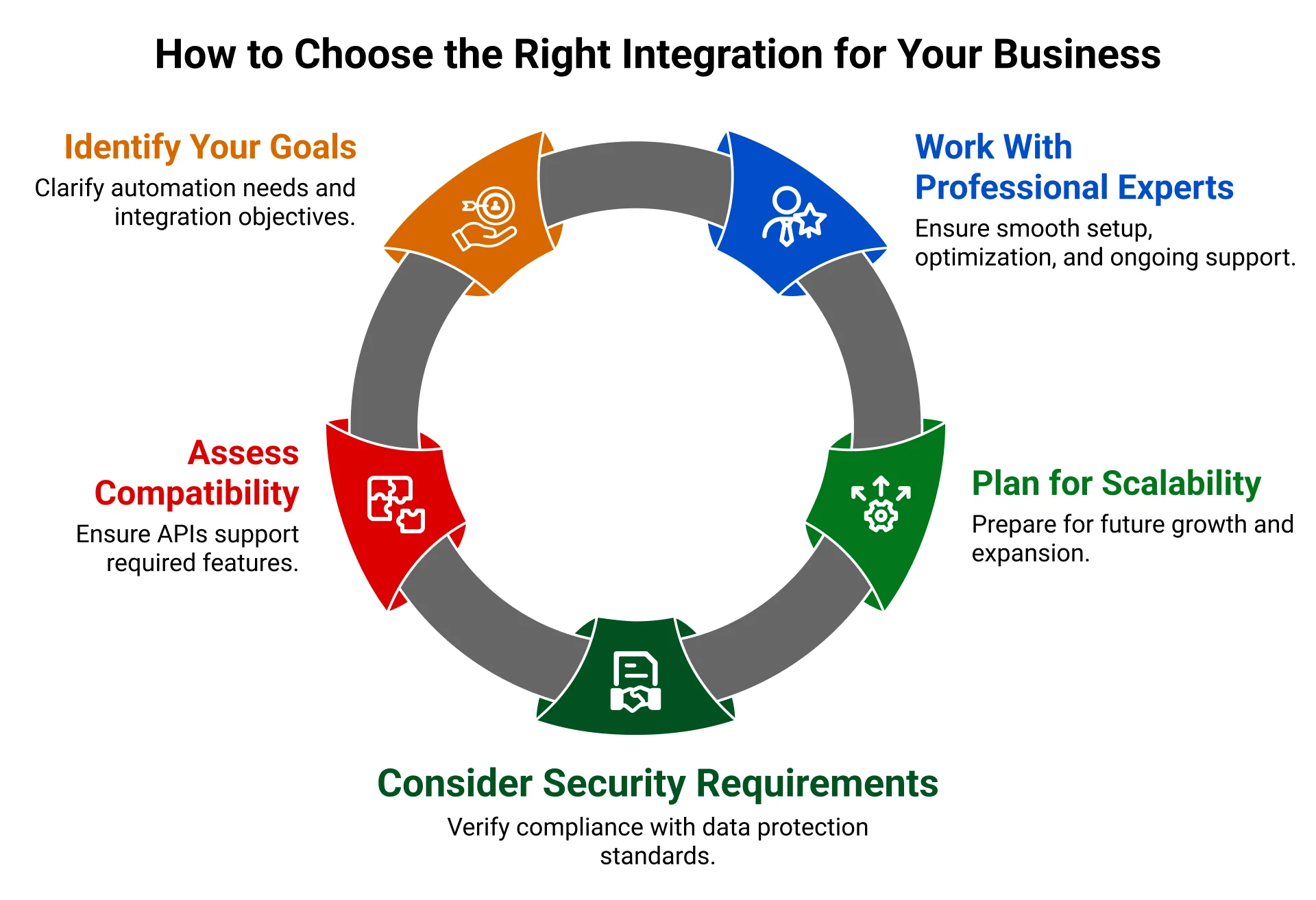
Identify Your Goals
Determine what processes you want to automate, which systems need to be connected, and what challenges you want to resolve.
Assess Compatibility
Review the API documentation of the platforms involved to ensure they support the functionality you require.
Consider Security Requirements
Check whether the integration approach meets your industry’s data protection standards.
Plan for Scalability
Ensure the solution can accommodate future growth, additional tools, or increased data flow.
Work With Professional Experts
Partnering with experienced providers of business API solutions ensures smooth implementation, improved performance, and long-term reliability. Experts can identify integration gaps, optimise communication between systems, and provide ongoing technical support.
Case Studies: API Integration Solutions Delivered by Ficode
These case studies showcase how Ficode delivers reliable and tailored API integration solutions for businesses across industries. From automating complex workflows to synchronising critical data between legacy and modern systems, our solutions help clients improve efficiency, accuracy, and operational productivity.
Case Study: Middleware Integration for Airwave
Ficode successfully delivered a custom middleware solution for Airwave, a leading UK electronics supplier, to synchronise data between two critical systems Mojo and their legacy Tesseract platform. Airwave had moved to Mojo for modern ticket management but still relied on Tesseract for several core processes, creating the need for a reliable integration layer.
Ficode developed a bespoke middleware using Node.js, Azure, and SOAP/REST APIs to automate ticket updates, implement configurable scheduling, and enable a robust retry mechanism to prevent data loss during downtime. The solution ensured accurate, real-time synchronisation across both platforms, significantly reducing manual workload and improving operational reliability. Airwave praised the integration for its stability, detailed monitoring features, and the noticeable increase in efficiency across their engineering teams.
Case Study: Middleware Solution for Orelia
Ficode assisted Orelia, a leading online jewellery platform, in enhancing wholesale operations by integrating their inventory and customer management system with the JOOR B2B marketplace.
We developed a custom middleware using Node.js, Express.js, React.js, and MongoDB to synchronise products, orders, stock, and customer data between both platforms. The solution included a user-friendly interface for monitoring, robust logging, and error handling to ensure reliable performance. This integration reduced manual work, improved operational efficiency, and enabled timely, accurate data updates, helping Orelia streamline wholesale operations while maintaining high levels of customer satisfaction and productivity.
Conclusion
API integration is essential for modern businesses aiming to improve efficiency, enhance customer experience, and make informed decisions. The best API integration is secure, scalable, reliable, and designed to support your long-term goals. Whether you choose pre-built options or invest in custom API integration, the key is to create a seamless data workflow that connects every part of your digital ecosystem.
Ready to streamline your business operations and unlock the full potential of your software systems? Partner with Ficode today for expert API integration solutions tailored to your unique business needs.

Nihal Rajput is the Operations Director at Ficode Software Solutions Pvt. Ltd., where he oversees day-to-day operations, streamlines processes, and drives organisational efficiency. With a focus on delivering scalable solutions and maintaining operational excellence, he plays a key role in aligning teams, optimising resources, and ensuring client satisfaction as the company grows.
 Previous
 Next
Next