


Feb
The Best API Integration Architecture: REST, SOAP, GraphQL & Webhooks
In today’s connected digital environment, businesses depend on different software systems working together smoothly. From internal tools to third-party platforms, everything needs to communicate without friction. This is where API integration architecture plays a key role. It defines how applications share data, trigger actions, and stay in sync across systems.
Choosing the right API integration approach is not just a technical decision. It impacts performance, scalability, security, and how easily your systems can grow in the future. In this blog, we’ll break down the most common API integration architectures REST, SOAP, GraphQL, and Webhooks and help you understand when and why each one is used.
Understanding API Integration Architecture
API (Application Programming Interface) integration architecture is essentially the framework that controls how software applications communicate with each other. It acts as a roadmap for data exchange, defining how requests are made, how responses are returned, and how systems stay connected.
A well-designed API integration architecture helps businesses reduce development effort, improve system reliability, and create better user experiences. On the other hand, choosing the wrong approach can lead to performance issues, security risks, and maintenance challenges over time.
REST API: The Most Widely Used Approach
REST API integration has become the most common choice for modern applications. It uses standard HTTP methods such as GET, POST, PUT, and DELETE, making it easy to understand and implement across different platforms.
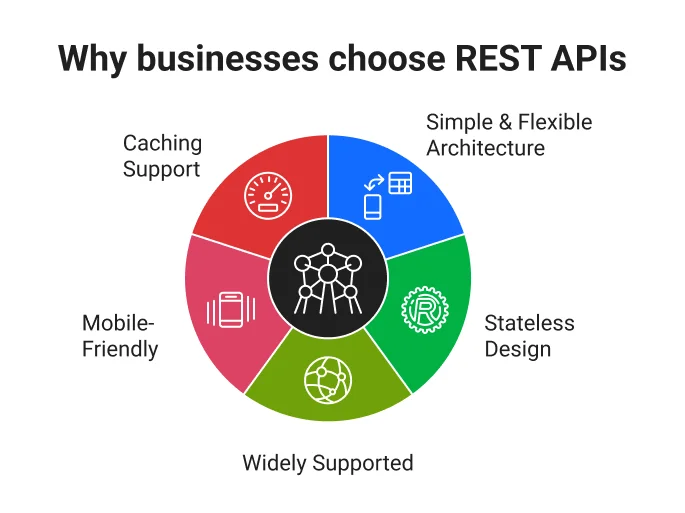
Why businesses choose REST APIs:
- Simple and flexible: REST APIs are lightweight and easy to work with
- Stateless design: Each request is independent, improving reliability
- Widely supported: Strong community support and extensive documentation
- Mobile-friendly: Works well for mobile and web applications
- Caching support: Helps improve performance and reduce server load
REST API integration is ideal for applications that need basic data operations and scalability. It’s a reliable choice for building APIs that are easy to maintain and work consistently across multiple systems.
SOAP: Built for Enterprise-Level Needs
SOAP API integration follows a more structured and formal approach. While it may feel less modern than REST, SOAP is still widely used in industries where security, reliability, and strict standards are critical.
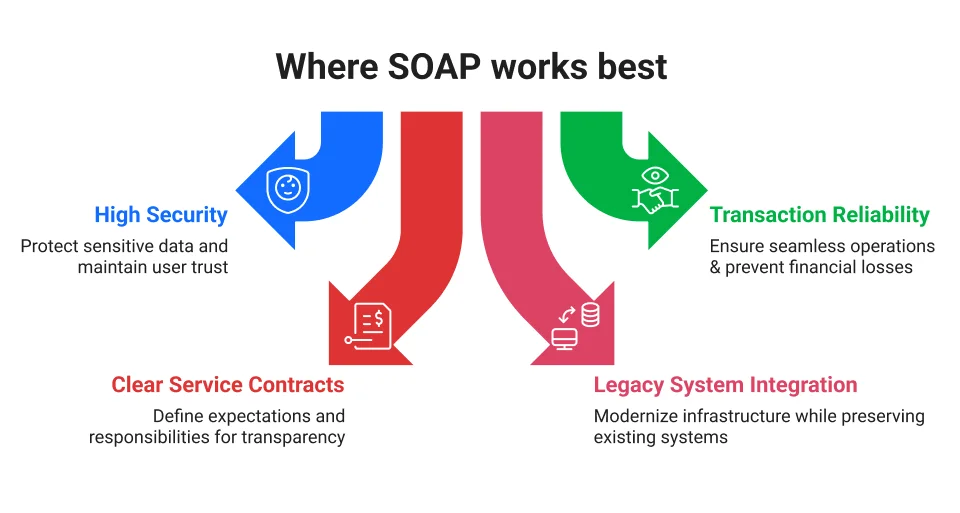
Where SOAP works best:
- High security requirements: Built-in security standards make it suitable for finance and healthcare
- Transaction reliability: Supports ACID transactions for data consistency
- Clear service contracts: WSDL defines exact API behavior
- Legacy system integration: Common in large enterprise environments
SOAP is often preferred when businesses deal with sensitive data or complex transactions that require guaranteed accuracy and compliance.
GraphQL API: Flexible and Efficient Data Access
GraphQL API integration takes a different approach by allowing clients to request exactly the data they need nothing more, nothing less. This makes it especially useful for applications with complex data relationships.
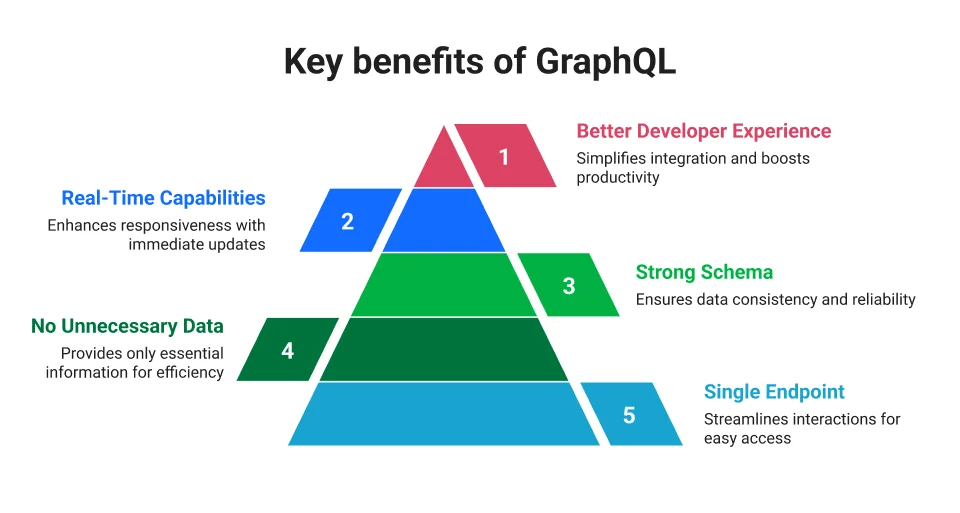
Key benefits of GraphQL:
- Single endpoint: All queries are handled through one endpoint
- No unnecessary data: Improves performance by avoiding over-fetching
- Strong schema: Reduces errors and improves development clarity
- Real-time capabilities: Supports subscriptions for live updates
- Better developer experience: Powerful tools for testing and exploration
GraphQL works well for applications that serve multiple clients, such as web and mobile apps, where each may need different data structures from the same backend.
Webhooks: Real-Time, Event-Based Communication
Webhooks focus on real-time communication. Instead of constantly checking for updates, systems receive notifications automatically when specific events occur.
Why Webhooks are useful:
- Instant updates: Events are delivered in real time
- Efficient communication: No need for repeated polling
- Simple setup: Uses standard HTTP callbacks
- Scalable: Handles large volumes of events smoothly
Webhooks are commonly used for payment updates, notifications, and integrations that require immediate action. They are often combined with REST APIs to build complete API integration solutions.
How to Choose the Right API Integration Architecture
There’s no single best architecture for every business. The right choice depends on your goals, systems, and future plans.
Choose REST API integration if you:
- Are building public APIs or microservices
- Need a scalable and straightforward solution
- Want faster development with fewer complexities
Choose SOAP API integration if you:
- Require enterprise-level security
- Work with legacy systems
- Need strict data consistency and formal contracts
Choose GraphQL API if you:
- Support multiple client applications
- Manage complex or connected data
- Want better control over data usage
Choose Webhooks if you:
- Need real-time notifications
- Use event-driven workflows
- Integrate frequently with third-party platforms
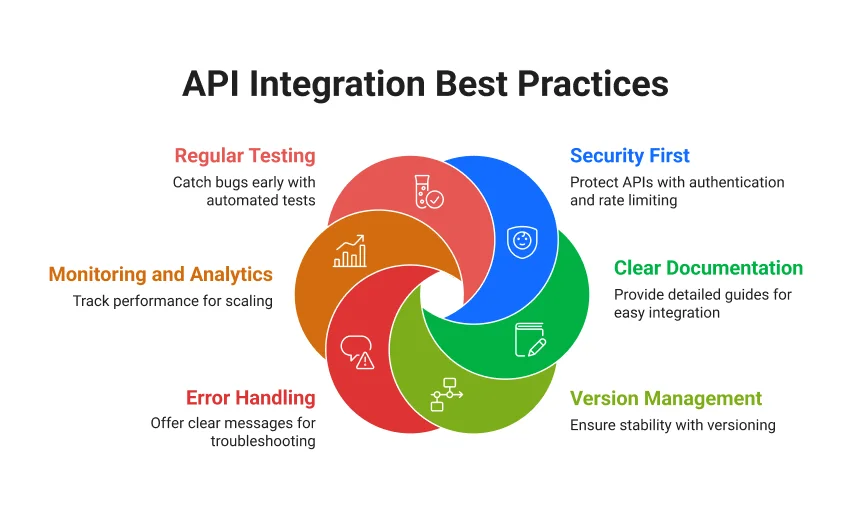
API Integration Best Practices
No matter which architecture you choose, following API integration best practices ensures long-term stability and performance.
Security First
Protect APIs using authentication methods like OAuth 2.0, API keys, and rate limiting. This helps prevent unauthorised access and performance issues.
Clear Documentation
Well-written documentation makes integration easier. Include endpoint details, examples, and authentication steps to reduce errors.
Version Management
Use versioning to introduce updates without breaking existing integrations. This keeps systems stable as APIs evolve.
Error Handling
Provide clear error messages and standard HTTP status codes to make troubleshooting easier for developers.
Monitoring and Analytics
Track performance, uptime, and usage to identify issues early and plan for scaling.
Regular Testing
Automated and ongoing testing helps catch bugs and performance issues before they impact users.
Conclusion
The best API integration architecture depends on your business needs and technical requirements. REST API integration is popular for its simplicity, SOAP remains important for enterprise security, GraphQL offers flexibility for complex applications, and Webhooks enable real-time communication.
At Ficode, we help businesses design and implement reliable API integration solutions that fit their unique goals. Whether you’re upgrading legacy systems or building modern applications, the right API architecture creates a strong foundation for digital growth.
If you’re planning to improve system connectivity or explore better API integration strategies, Ficode is here to help you build secure, scalable, and efficient solutions that support your business long term.

Nihal Rajput is the Operations Director at Ficode Software Solutions Pvt. Ltd., where he oversees day-to-day operations, streamlines processes, and drives organisational efficiency. With a focus on delivering scalable solutions and maintaining operational excellence, he plays a key role in aligning teams, optimising resources, and ensuring client satisfaction as the company grows.

 Previous
 Next
Next