

Jan
How to Choose the Right API Integration Partner – A Complete Guide

When your business decides to integrate APIs (Application Programming Interfaces) to streamline processes, enhance customer experiences, and scale operations, choosing the right API integration partner is key to success. API integration can significantly improve your systems, but it’s only effective if the partner you choose has the right expertise, experience, and approach.
In this guide, we’ll walk you through the essential factors to consider when selecting an API Integration partner that suits your business needs.
What is an API Integration Partner?
An API Integration partner is a service provider that helps your business connect various software applications through APIs. This partner doesn’t just help with the technical implementation—they also offer strategic guidance, ensuring the integration aligns with your goals, improves operations, and supports long-term growth.
Selecting the right partner is more than just about technical skills. You need someone who understands your business, your industry, and how the integration can help you solve your specific challenges.
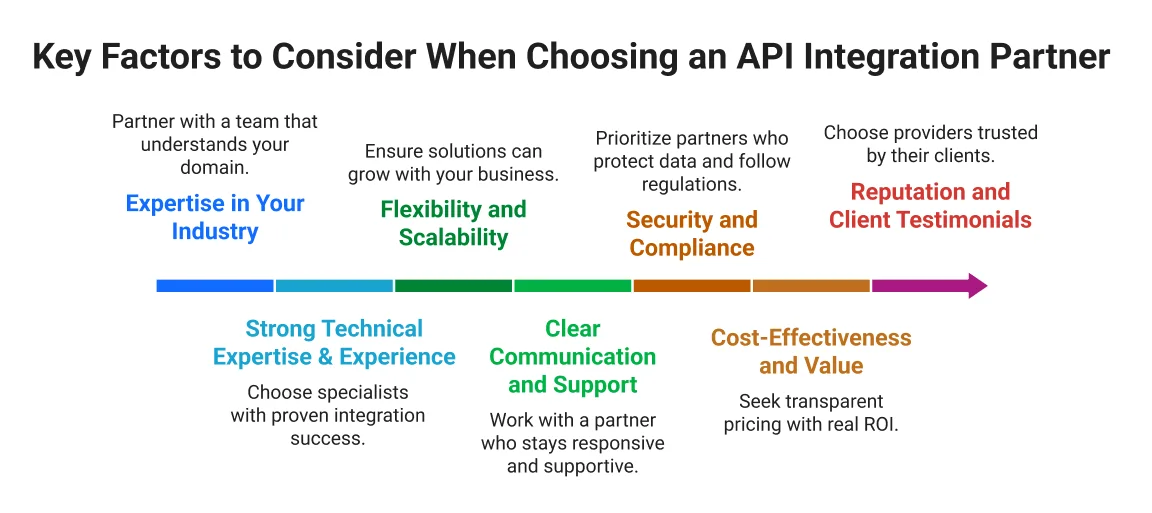
Key Factors to Consider When Choosing an API Integration Partner
Choosing an API integration partner can feel overwhelming because there are so many options. To make the process easier, here are the key things to look for:
1. Expertise in Your Industry
Not all API integration partners are created equal. While technical proficiency is a must, understanding the unique challenges and requirements of your industry can make a huge difference.
For example, an integration partner with experience in eCommerce will understand how to connect payment gateways, inventory systems, and customer support tools. Similarly, if you’re in the healthcare industry, they should be familiar with HIPAA-compliant APIs and data security standards.
How to evaluate:
- Look for case studies or previous projects that are relevant to your industry.
- Check client reviews and testimonials for feedback from companies similar to yours.
2. Strong Technical Expertise & Experience
API integration involves connecting multiple systems, and this requires solid technical expertise. Your partner should have a proven track record of successfully executing API projects, from initial planning to full deployment.
They should also have experience with various types of integrations—whether it’s cloud-based, third-party APIs, or custom API development.
How to evaluate:
- Ask about their team’s qualifications and technical certifications.
- Ensure they have experience with the specific technologies you use (e.g., REST, SOAP, JSON, etc.).
3. Flexibility and Scalability
Your business will grow, and so will your needs. The right API Integration services partner should offer solutions that are flexible and scalable. They should be able to handle your current needs while also helping you expand as your business evolves.
Scalability is especially important if you anticipate increasing data flow, adding new integrations, or upgrading systems in the future. The partner should ensure that the solution can grow with your business.
How to evaluate:
- Ask if they have worked with businesses at different stages of growth.
- Inquire about how they ensure their solutions remain adaptable and scalable.
4. Clear Communication and Support
Effective communication is essential throughout the integration process. Your partner should be transparent, explain their approach clearly, and be proactive in addressing any concerns.
Post-integration support is equally important. APIs can face issues, require updates, or need optimization over time. Your partner should offer ongoing support to ensure the integrations are working smoothly.
How to evaluate:
- During your initial conversations, assess how well they communicate and how responsive they are to your questions.
- Check if they provide clear SLAs (Service Level Agreements) and support plans for post-integration issues.
5. Security and Compliance
APIs often deal with sensitive data—whether it’s customer information, financial data, or proprietary business data. Therefore, data security should be a top priority. Your API partner should follow best practices for securing data during integration, including encryption, access controls, and compliance with relevant regulations (such as GDPR, HIPAA, etc.).
How to evaluate:
- Ask about their security protocols, including data encryption and security audits.
- Ensure they understand the compliance requirements specific to your industry.
6. Cost-Effectiveness and Value
While API integration can be a valuable investment, it’s essential to consider the costs involved. The cheapest option may not always be the best choice, especially if it compromises quality or long-term support. At the same time, you don’t want to overpay for services you don’t need.
Look for a partner who offers a clear pricing structure and is transparent about any additional costs. They should be focused on delivering value rather than just the lowest price.
How to evaluate:
- Request a detailed proposal with a breakdown of costs.
- Consider the long-term ROI of the solution, not just the initial cost.
7. Reputation and Client Testimonials
A solid reputation is a good indicator of a reliable and trustworthy API partner. Positive client testimonials and reviews are a great way to gauge the quality of service they provide.
How to evaluate:
- Read through customer reviews on their website or third-party platforms.
- Ask for client references to get firsthand feedback on their services.
How the Right API Integration Partner Drives Business Growth
Choosing the right API integration partner can significantly enhance your business operations. From automating manual tasks to offering real-time data exchange, API Integration can drive efficiency, improve decision-making, and scale your business.
The right partner will not only handle the technical side but will also help you optimize workflows, improve customer experience, and keep your systems running smoothly. API integration plays a crucial role in ensuring your business stays competitive and adaptable in a fast-paced market. Understanding why API integration is essential for your growth is the first step in leveraging its full potential.
Conclusion
Choosing the right API integration partner is a crucial decision that can have a long-lasting impact on your business. By considering factors like technical expertise, industry experience, communication, and scalability, you can ensure that your API integration supports your business’s goals and helps drive future growth.
Take your time in evaluating potential partners, and remember – API integration is an investment in your company’s efficiency, scalability, and success. The right partner will help you unlock the full potential of your systems and set you up for long-term growth.

Nihal Rajput is the Operations Director at Ficode Software Solutions Pvt. Ltd., where he oversees day-to-day operations, streamlines processes, and drives organisational efficiency. With a focus on delivering scalable solutions and maintaining operational excellence, he plays a key role in aligning teams, optimising resources, and ensuring client satisfaction as the company grows.

 Previous
 Next
Next