


Feb
SaaS API Integration Best Practices for Scalable Platforms

SaaS API integration plays a critical role in building platforms that are scalable, secure, and easy to integrate with other systems. As SaaS products grow, APIs are no longer just technical connectors – they become the backbone of the entire ecosystem. When integrations are not planned properly, they can create performance issues, security risks, and a poor user experience.
This blog highlights practical best practices for SaaS API integration, helping businesses build platforms that scale smoothly while maintaining strong performance, security, and developer confidence.
For modern SaaS products, an API-first mindset is essential. Whether you are developing a CRM, analytics tool, or eCommerce platform, a well-defined API integration strategy for SaaS can set your product apart and support long-term growth.
Design for API-First Architecture
An API-first approach ensures that integrations are considered from the very beginning of platform development. Instead of adding APIs later, integration capabilities are built into the core architecture. This allows SaaS platforms to scale easily and support partner ecosystems without major rework.
Start by defining clear API contracts that explain how external systems can interact with your platform. Using standards like OpenAPI or Swagger makes your APIs easier to understand and adopt. Clear documentation reduces confusion, speeds up development, and improves overall integration success.
Implementing an API gateway is another important step. It acts as a single entry point for managing authentication, rate limiting, routing, and monitoring. This centralised control improves security and ensures consistent behavior across all APIs.
Implement Multi-Tenant Architecture
Multi-tenant architecture is essential for scalable SaaS platforms. It allows multiple customers to use the same infrastructure while keeping their data fully isolated and secure. When implemented correctly, it improves efficiency and reduces operational costs.
Databases should be designed with tenant awareness from the start. Using tenant IDs to segment data ensures that each request only accesses the correct customer information. Adding row-level security provides an extra layer of protection and helps meet compliance requirements.
To maintain platform stability, it’s important to manage resources fairly. Rate limits and usage quotas prevent any single tenant from overusing system resources. Tracking usage also supports future scaling and enables flexible pricing models.
Prioritise Data Portability
Data portability has become a key expectation for SaaS users. Providing easy data export options builds trust and gives customers confidence that they remain in control of their information.
APIs should support data exports in common formats such as JSON or CSV. These exports should include not only raw data but also related configurations and metadata. Clear documentation helps users understand what data is available and how to retrieve it.
For large datasets, asynchronous export processes work best. They prevent system slowdowns and ensure users can continue working while exports are prepared in the background.
Master API Authentication and Security
Secure API integration is one of the most important aspects of any SaaS platform. APIs often handle sensitive data, so strong authentication and authorisation are non-negotiable.
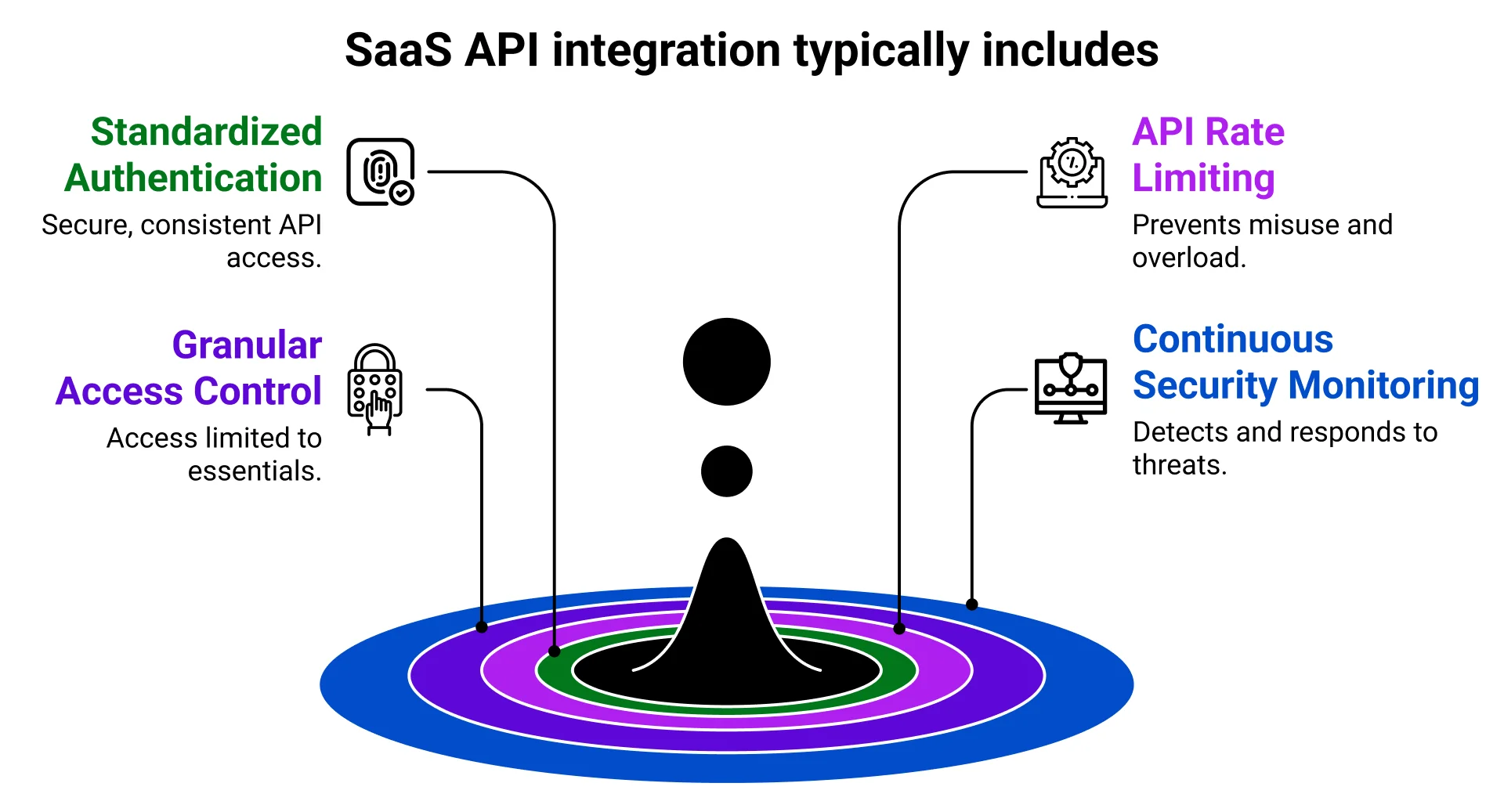
OAuth 2.0 combined with OpenID Connect is a widely accepted standard that enables secure, token-based access without sharing credentials. A strong security foundation for SaaS API integration typically includes:
- Standardised Authentication – Using OAuth 2.0 and OpenID Connect to ensure secure and consistent access across integrations.
- Granular Access Control – Implementing role-based and attribute-based permissions to restrict access to only what is necessary.
- API Rate Limiting – Defining usage limits to prevent abuse, protect system stability, and support tier-based access.
- Continuous Security Monitoring – Tracking API usage, detecting anomalies, and responding quickly to potential threats.
These measures collectively reduce security risks while ensuring reliable and scalable API integration.
Version Your APIs for Long-Term Stability
API versioning allows your platform to evolve without breaking existing integrations. Clear versioning helps developers understand changes and plan upgrades confidently.
Using URI-based versioning makes API versions easy to identify and manage. When changes are required, provide advance notice, clear migration guides, and support to ensure a smooth transition for users.
Implement Comprehensive Monitoring
Monitoring ensures your SaaS API integration continues to perform reliably as usage grows. Tracking metrics such as response time, error rates, and traffic patterns helps teams identify issues early.
Distributed tracing and structured logging provide deeper visibility into how requests move through your system. This makes troubleshooting faster and reduces downtime.
Optimise API Performance
API performance has a direct impact on user satisfaction. Caching frequently accessed data, using efficient pagination, and allowing selective data retrieval can significantly improve response times.
Designing APIs for horizontal scaling ensures they can handle traffic spikes without service disruption. Load balancing and auto-scaling mechanisms help maintain consistent performance during peak usage.
Foster a Strong Developer Experience
A positive developer experience encourages adoption and long-term use of your APIs. Clear documentation, real-world examples, and code samples make integrations easier to implement.
Providing sandbox environments allows developers to test safely before going live. Sharing best-practice guidelines and offering responsive support builds trust and strengthens partner relationships.
Conclusion
Successful SaaS API integration depends on thoughtful design, strong security, and a focus on scalability. By adopting an API-first approach, implementing multi-tenant architecture, ensuring secure API integration, and prioritising developer experience, SaaS platforms can support long-term growth and seamless integrations.
A well-planned API integration strategy for SaaS not only improves platform performance but also positions your product as a reliable and future-ready solution.
If you’re looking for expert API integration services to build scalable, secure, and high-performing SaaS platforms, Ficode Technologies can help. Our team specialises in designing and implementing tailored SaaS API integration solutions that align with your business goals.
Connect with Ficode today to discuss how we can support your platform’s growth with reliable and future-proof API integrations.

Nihal Rajput is the Operations Director at Ficode Software Solutions Pvt. Ltd., where he oversees day-to-day operations, streamlines processes, and drives organisational efficiency. With a focus on delivering scalable solutions and maintaining operational excellence, he plays a key role in aligning teams, optimising resources, and ensuring client satisfaction as the company grows.

 Previous
 Next
Next