


Mar
How to Future-Proof Your API Integration for Scalability

As businesses grow, their digital systems must grow with them. One of the key factors that supports this growth is API integration for scalability. APIs connect different applications, enable data sharing, and power automation across systems. However, if API integrations are not designed with scalability in mind, they can quickly become a bottleneck as traffic, users, and data volumes increase.
Future-proofing your API integration means preparing it to handle growth without constant rework or performance issues. A well-planned API integration strategy helps businesses stay flexible, maintain system reliability, and support long-term digital transformation. In this blog, we’ll explore practical API integration best practices that help build scalable, secure, and future-ready systems.
Why API Integration for Scalability Matters
Scalable API integration allows applications to handle increasing workloads without affecting performance or user experience. As businesses expand, APIs often need to support more users, integrate with additional platforms, and process larger amounts of data. Without scalability, this growth can lead to slow response times, system failures, and higher maintenance costs.
By focusing on scalability early, businesses can avoid these challenges. A scalable API integration strategy ensures smoother operations, improved reliability, and the flexibility to adapt to changing business requirements over time.
Key Focus Areas for Scalable API Integration
Building scalable APIs requires attention to both technical and strategic elements. When these foundations are in place, APIs are better equipped to support growth and evolving digital needs.
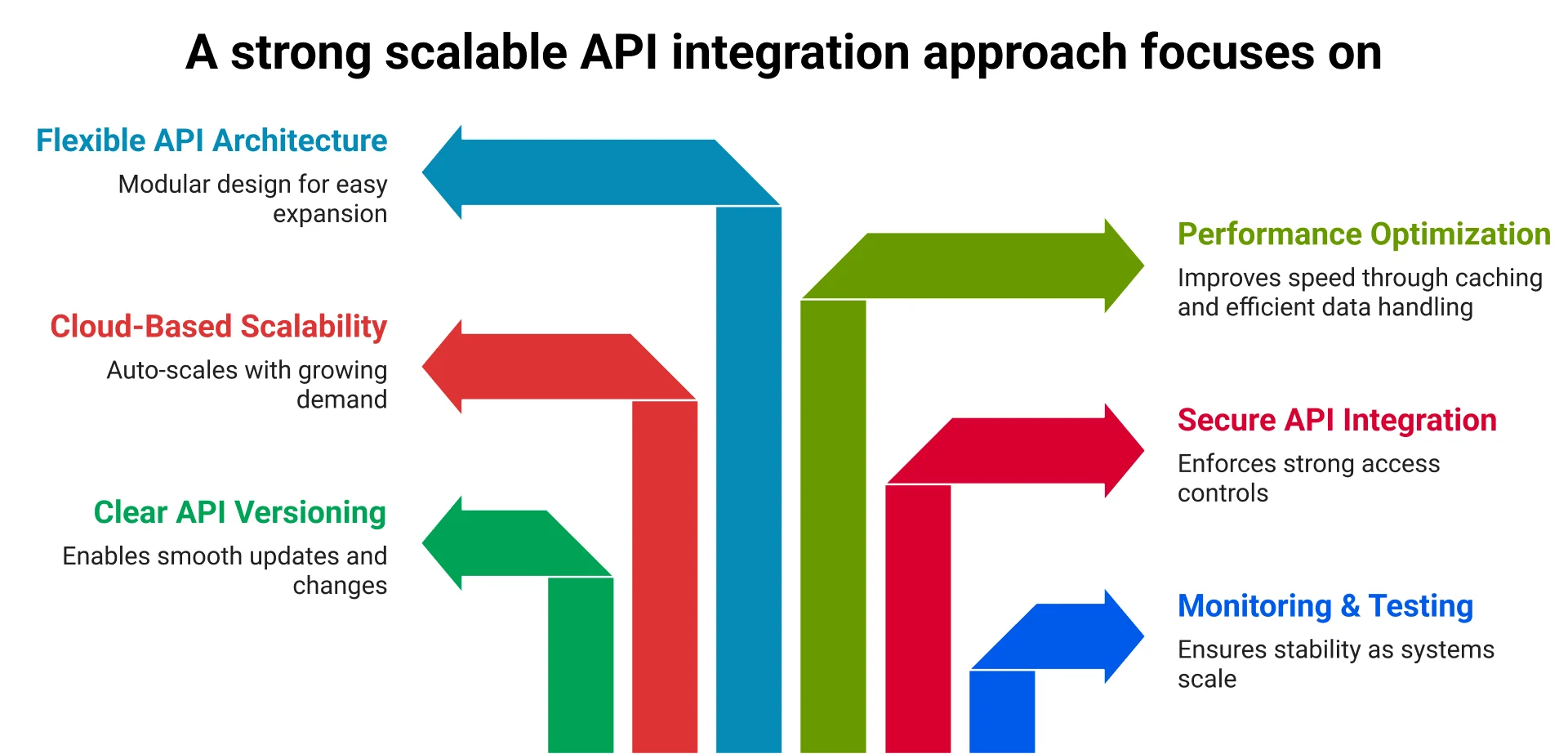
A strong scalable API integration approach focuses on:
- Flexible and modular API architecture
- Cloud-based infrastructure that supports auto-scaling
- Clear API versioning to manage updates smoothly
- Performance optimisation through caching and efficient data handling
- Secure API integration with proper access controls
- Continuous monitoring and scalability testing
These focus areas help ensure that API integrations remain stable, efficient, and ready to support increased demand.
Design APIs with a Flexible Architecture
A flexible architecture is essential for scalable API integration. Instead of tightly connected systems, modern applications benefit from modular designs where individual services operate independently. This allows specific components to scale based on usage without impacting the entire system.
This approach also makes maintenance easier. Updates or improvements can be made to one service without causing downtime across other integrations. By designing APIs with flexibility in mind, businesses create systems that can adapt as new requirements emerge.
Choose the Right API Integration Strategy
An effective API integration strategy aligns technical decisions with business goals. Whether the objective is to improve automation, enable real-time data sharing, or support new digital services, the integration approach should support scalability from the start.
Cloud-based API integration plays an important role here. Cloud platforms offer built-in tools such as load balancing and auto-scaling, making it easier to manage traffic spikes and growing workloads. This allows businesses to scale efficiently without investing heavily in additional infrastructure.
Optimise Performance as Usage Grows
Performance optimisation is a critical part of API integration best practices. Even well-designed APIs can struggle under heavy load if performance is not continuously optimised.
Caching helps reduce repeated processing and database queries by storing frequently accessed data. This improves response times and reduces system load. Database optimisation, including proper indexing and efficient query handling, also prevents performance bottlenecks as API usage increases.
Together, these optimisations ensure that scalable API integration delivers consistent performance, even during peak usage periods.
Secure API Integration at Scale
As API usage grows, security becomes increasingly important. Scalable systems must also be secure systems. Secure API integration protects sensitive data and ensures that increased traffic does not lead to increased risk.
Best practices include strong authentication mechanisms, access control policies, and rate limiting to prevent misuse. Regular security reviews help identify vulnerabilities early and maintain trust as systems expand. Security should always be built into the API integration strategy, not added as an afterthought.
Monitor, Test, and Improve Continuously
Scalability is not a one-time achievement. Continuous monitoring helps teams understand how APIs perform under different conditions. Tracking response times, error rates, and traffic patterns provides valuable insights into system behavior.
Regular testing, such as load and stress testing – ensures APIs can handle growth and sudden traffic spikes. These practices allow businesses to identify limitations early and improve their scalable API integration over time.
What Makes an API Integration Future-Ready
Future-ready APIs are built with growth, usability, and reliability in mind. They support ongoing improvements without disrupting existing systems.
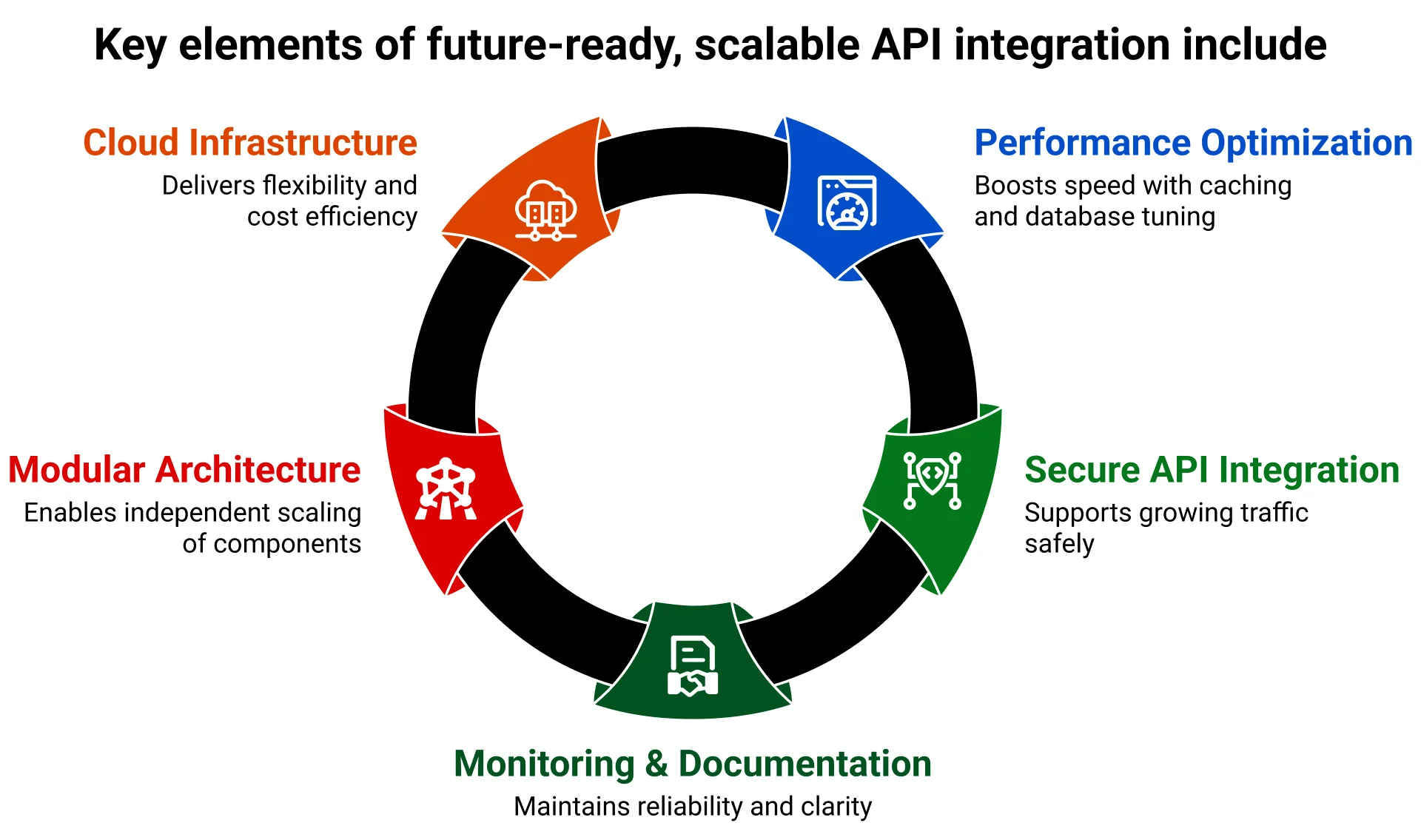
Key elements of future-ready, scalable API integration include:
- Modular architecture that supports independent scaling
- Cloud infrastructure for flexibility and cost efficiency
- Performance optimisation through caching and database tuning
- Secure API integration practices for growing traffic
- Ongoing monitoring, testing, and documentation
These elements help ensure that APIs remain reliable and adaptable as business needs evolve.
Conclusion
Building API integration for scalability is essential for businesses that want to grow without compromising performance or security. By following proven API integration best practices, choosing the right API integration strategy, and focusing on secure and scalable design, organisations can create systems that support long-term success.
A scalable API foundation improves reliability, enhances user experience, and reduces operational complexity. With thoughtful planning and continuous optimisation, API integrations can remain flexible, secure, and ready for future growth.
Ficode Technologies helps businesses design and implement scalable API solutions that support digital transformation. With expertise in API integration, cloud-based systems, and secure architectures, Ficode ensures your integrations are built to scale with confidence.

Nihal Rajput is the Operations Director at Ficode Software Solutions Pvt. Ltd., where he oversees day-to-day operations, streamlines processes, and drives organisational efficiency. With a focus on delivering scalable solutions and maintaining operational excellence, he plays a key role in aligning teams, optimising resources, and ensuring client satisfaction as the company grows.

 Previous
 Next
Next