



Apr
Best API Integrations for eCommerce: Payments, Inventory & Automation

The difference between a smooth online shopping experience and a frustrating one often comes down to how well your systems connect. The best API integrations ecommerce businesses rely on bring together payments, inventory, shipping, and customer data into one streamlined workflow.
Without these integrations, teams end up switching between tools, updating data manually, and risking costly errors. But when everything works together, orders move effortlessly from checkout to delivery – saving time and improving customer satisfaction.
The Three Categories of Essential eCommerce APIs
Every successful eCommerce store depends on three key types of integrations: payment processing, inventory management, and automation.
Each plays a different role, but together they create a system that supports growth, reduces manual work, and improves accuracy across operations.
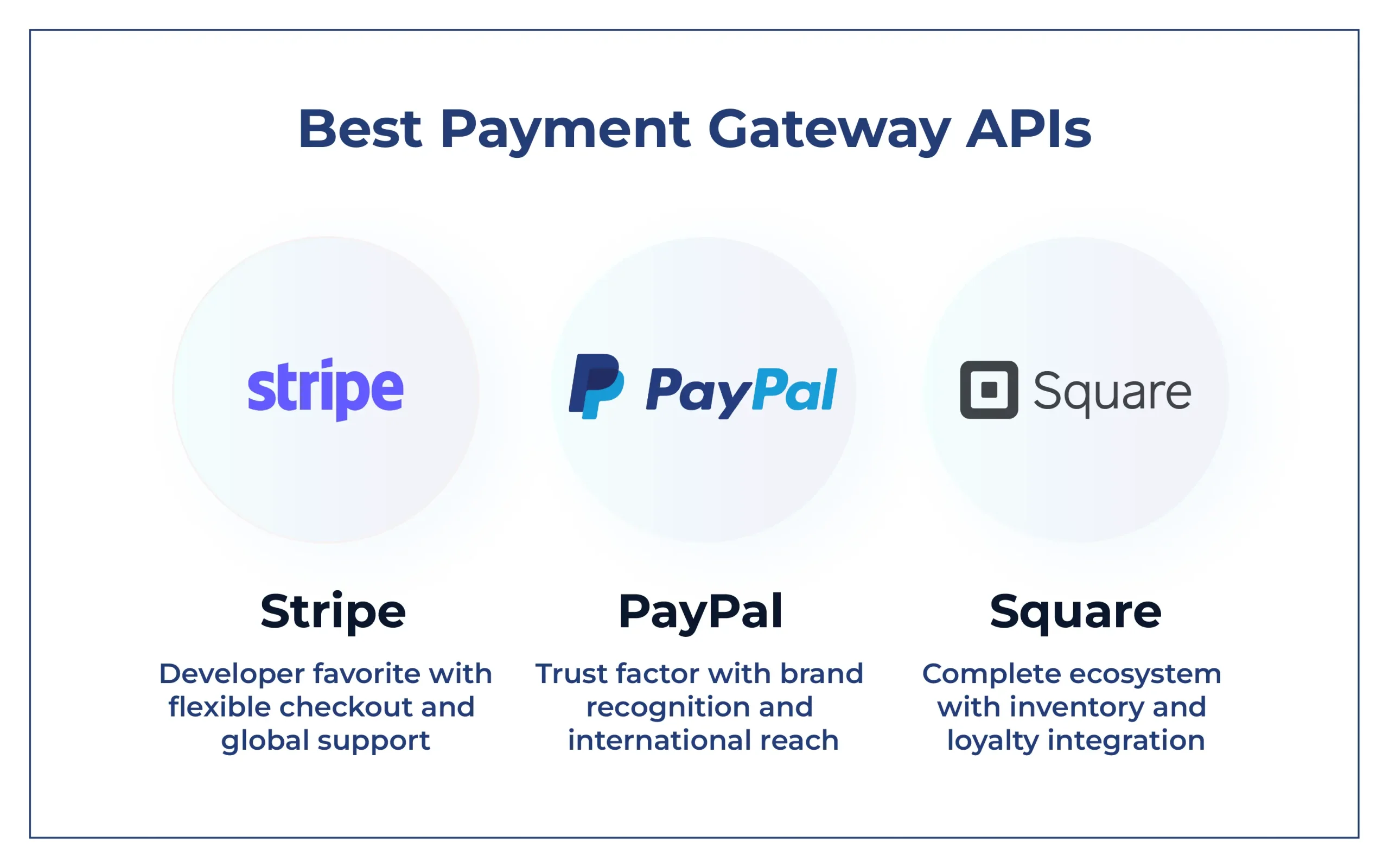
Best Payment Gateway APIs for Your Store
Payment APIs are your business lifeblood. They determine whether customers can complete purchases seamlessly. Here’s what separates the leaders:
Stripe: The Developer Favorite
Stripe processes billions in transactions annually across 120 countries. Its comprehensive ecommerce payment API supports credit cards, digital wallets, bank transfers, and buy-now-pay-later options. What makes Stripe exceptional is its flexibility – you control the entire checkout experience instead of being redirected elsewhere.
Why businesses choose Stripe:
– Transparent pricing with no hidden fees
– Powerful API for custom checkout flows
– Global payment support across 120+ countries
– Excellent security and fraud detection
– Real-time reporting and analytics
PayPal: The Trust Factor
PayPal’s brand recognition matters. Customers see the PayPal logo and feel confident completing transactions. Its comprehensive API handles credit cards, PayPal wallets, and PayPal Credit. The platform excels at international payments, supporting 200+ markets.
Best for: Established brands leveraging PayPal’s trust and international reach
Square: Complete Payment Ecosystem
Square offers more than payment processing. Its comprehensive system includes inventory management, customer loyalty programs, and analytics. Businesses using Square Payments integrate payments with real-time inventory updates automatically.
Best for: Omnichannel retailers with physical and online presence.
Inventory Management APIs Every Store Needs
Inventory issues are one of the biggest challenges in eCommerce. Selling out-of-stock products or showing incorrect availability can quickly damage trust.
That’s where strong inventory APIs come in – they keep your stock data accurate across all platforms in real time.
Shopify Inventory System: Smarter Multi-Channel Sync
Shopify helps businesses manage inventory across multiple locations and sales channels. When a product is sold, stock updates automatically everywhere???from your website to marketplaces like Amazon.
Key benefits:
- Real-time stock updates across channels
- Support for multiple warehouses
- Automated low-stock alerts
- Data-driven inventory forecasting
Many retailers see a noticeable drop in stock issues after implementing real-time inventory sync, leading to fewer missed sales opportunities.
BigCommerce: Built for Scale
BigCommerce is ideal for stores handling large product catalogues and complex operations. It supports advanced workflows like dropshipping and pre-orders, making it suitable for growing or enterprise-level businesses.
WooCommerce: Flexible for WordPress Users
WooCommerce works well for businesses already using WordPress. Its API connects inventory with your content and store, allowing you to manage everything from one place.
Advanced Automation Capabilities in API Integrations (2026)
API integrations go beyond basic connections – they enable automation that saves time and improves efficiency.
- Real-time data sync keeps your store, CRM, and tools aligned
- Scheduled updates handle tasks like inventory checks and reporting
- Webhooks trigger instant actions like order confirmations
- Batched updates improve performance during peak traffic
These features help businesses scale without increasing manual workload.
Order Management and Fulfillment
Automation plays a major role in handling orders efficiently. Once a customer places an order, it can automatically move to your warehouse system, generate shipping labels, and notify your team.
This reduces manual effort and speeds up processing time significantly.
Real-Time Shipping Integration
Shipping APIs connect your store with carriers like FedEx or DHL, helping you choose the best delivery option based on cost and speed.
Customers also receive tracking details instantly, improving transparency and trust.
CRM and Marketing Automation
API integrations ensure customer data flows directly into your CRM. This allows you to trigger automated emails, personalised offers, and loyalty campaigns without manual input.
For example, many businesses see higher engagement when welcome emails are sent instantly after purchase instead of delayed.
Platform-Specific Integration Systems
Different platforms offer different strengths when it comes to API integrations.
Shopify: Known for its ease of use and strong ecosystem, Shopify offers flexible APIs and real-time updates through webhooks.
WooCommerce: Offers full control and customisation, making it ideal for businesses with specific technical requirements.
BigCommerce: Designed for complex operations, it supports advanced features like multi-store setups and international selling.
Building Your Integration Strategy
A clear approach helps you get the most out of API integrations.
- Start with payments: Ensure a smooth and secure checkout experience
- Focus on inventory: Avoid overselling and stock issues
- Add automation: Streamline repetitive tasks and improve efficiency
By prioritising these areas, you build a strong foundation for scaling your eCommerce business.
Security First: Protecting Your API Integrations
Security should always be a priority when working with APIs.
- Store API keys securely using environment variables
- Always use HTTPS for data transfer
- Implement authentication methods like OAuth
- Monitor API activity with logs and alerts
Strong security not only protects your business but also builds customer trust.
API Integration Best Practices for eCommerce (2026)
To keep your integrations reliable and scalable:
- Use webhooks for real-time updates
- Add retry logic to handle failures
- Monitor API performance regularly
- Use versioning to manage updates safely
- Apply rate limiting to avoid overload
Following these practices ensures your systems remain stable as your business grows.
The ROI of Strategic Integration
Investing in the best API integrations ecommerce solutions can deliver measurable results:
- Reduced manual work and errors
- Faster order processing
- Improved customer experience
- Increased revenue through better efficiency
Many businesses report noticeable improvements in operations and customer satisfaction after implementing the right integrations.
Conclusion
API integrations are no longer optional – they are a core part of running a successful eCommerce business. From payments and inventory to automation, the right integrations help streamline operations, reduce errors, and deliver a better customer experience.
By starting with essential systems and gradually building a connected ecosystem, businesses can scale more efficiently and stay competitive in a fast-moving digital landscape.
If you’re looking to implement the best API integrations ecommerce solutions tailored to your business needs, Ficode can help you design and build scalable, secure, and high-performing integration systems that drive real results.

Nihal Rajput is the Operations Director at Ficode Software Solutions Pvt. Ltd., where he oversees day-to-day operations, streamlines processes, and drives organisational efficiency. With a focus on delivering scalable solutions and maintaining operational excellence, he plays a key role in aligning teams, optimising resources, and ensuring client satisfaction as the company grows.

 Previous
 Next
Next