



Apr
What Is eCommerce API Integration? Benefits, Use Cases & Best Practices

Running an eCommerce business today means managing multiple systems at once ??? your website, payment gateway, inventory, shipping, and customer data. When these systems don’t communicate properly, it leads to delays, manual errors, and poor customer experience.
This is where eCommerce API integration becomes essential.
It connects all your business tools so data flows automatically between them. Orders get processed instantly, inventory updates in real time, and customers receive timely updates – without manual effort.
What is eCommerce API Integration?
eCommerce API integration is the process of connecting different software systems using APIs (Application Programming Interfaces) so they can share data automatically.
Instead of manually entering order details into multiple platforms, APIs allow systems to ???talk??? to each other. For example, when a customer places an order, your store can instantly communicate with payment systems, inventory tools, and shipping providers.
The result? A faster, more accurate, and scalable business operation.
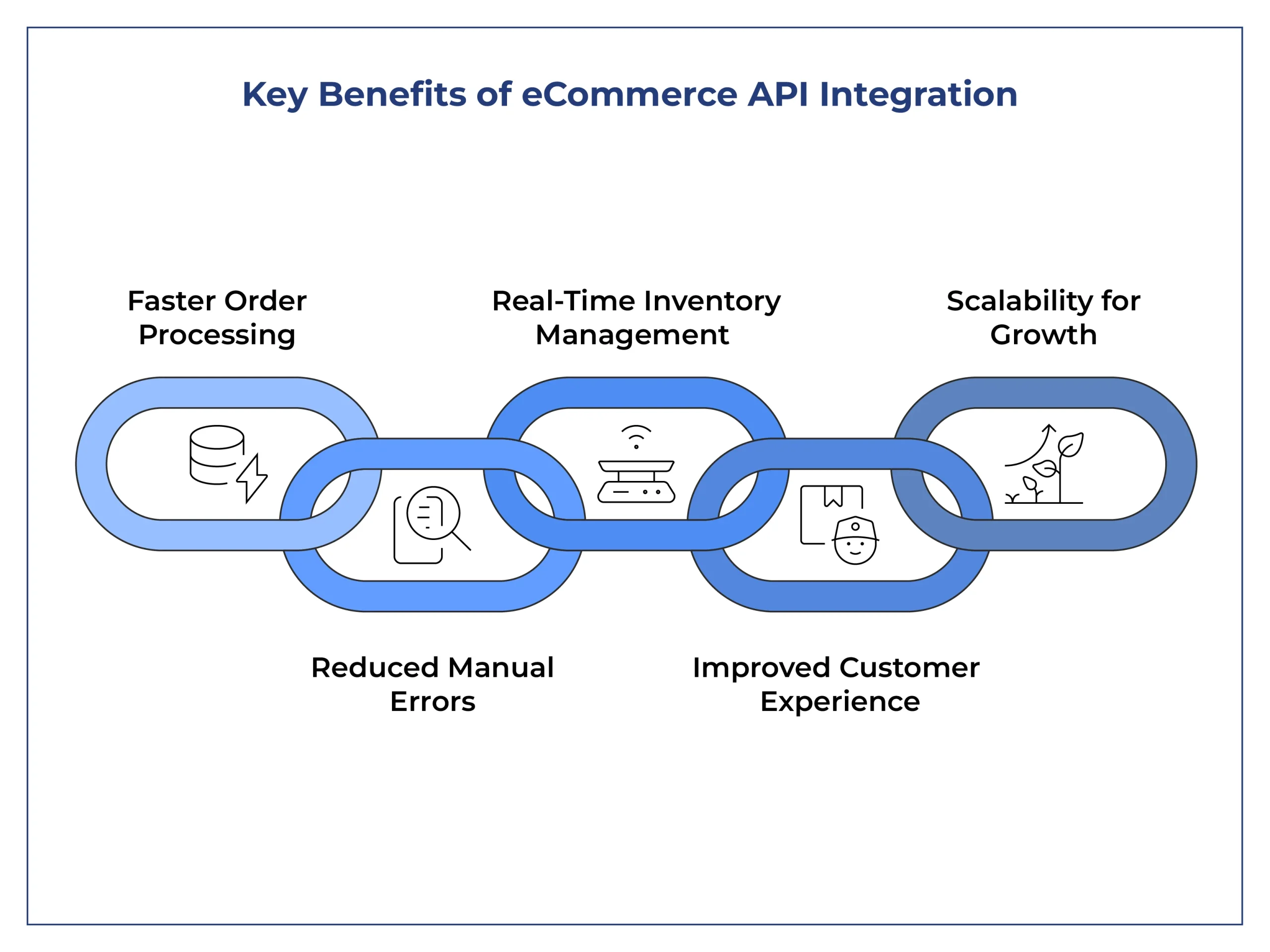
Key Benefits of eCommerce API Integration
1. Faster Order Processing
Orders move through your system in seconds instead of hours. From payment confirmation to shipping updates, everything happens automatically.
2. Reduced Manual Errors
Manual data entry often leads to mistakes – wrong addresses, incorrect stock levels, or missed orders. API integration eliminates these risks by automating workflows.
3. Real-Time Inventory Management
Stock levels update instantly across all sales channels. This prevents overselling and ensures customers only purchase available products.
4. Improved Customer Experience
Customers receive real-time updates, faster deliveries, and smoother checkout experiences – leading to higher satisfaction and repeat purchases.
5. Scalability for Growth
As your business grows, API integration allows you to handle more orders without increasing manual workload.
Common Use Cases in eCommerce
API integration helps streamline key operations across an eCommerce business:
Payment Integration
Connect your store with payment gateways to process transactions securely and instantly, creating a smooth checkout experience and reducing cart abandonment.
Inventory Synchronisation
Keep stock levels updated across all platforms in real time, preventing overselling and ensuring accurate product availability.
Order Management
Automate order processing from placement to delivery, reducing manual work, and improving operational efficiency.
Shipping & Logistics
Integrate with shipping providers to automate label generation, rate calculation, and real-time tracking updates for customers.
Multi-Channel Selling
Sync data across platforms like your website and marketplaces, ensuring consistency in orders, inventory, and pricing.
Challenges in eCommerce API Integration
While API integration offers many benefits, businesses may face some challenges during implementation and maintenance:
Integration Complexity
Connecting multiple systems is not always straightforward. Different platforms often use different data formats, protocols, or architectures, which can make integration technically challenging. Without proper planning or expertise, this can lead to delays and inefficient workflows.
Data Sync Issues
If APIs are not configured correctly, data may not update in real time. This can result in mismatched inventory levels, delayed order updates, or incorrect customer information. Even small syncing issues can impact customer experience and business operations.
Security Concerns
Handling sensitive data such as payment details and customer information requires strong security measures. APIs must use encrypted connections and secure authentication methods to prevent data breaches, unauthorised access, or fraud risks.
Maintenance & Updates
APIs are not a one-time setup. They require ongoing monitoring, updates, and occasional fixes to ensure everything runs smoothly. Changes in third-party platforms or system upgrades can also affect integrations, requiring continuous attention.
Businesses often overcome these challenges by working with experienced development teams who can ensure secure, scalable, and reliable API integration.
Best Practices for Successful API Integration
To get the most out of eCommerce API integration, follow these best practices:
Start with Core Integrations
Begin with essential systems like payment processing and inventory management before expanding to other tools. This ensures your core operations run smoothly and reduces the risk of complications during the initial setup.
Use Reliable Platforms
Choose trusted eCommerce platforms like Shopify, WooCommerce, or BigCommerce that offer built-in support for API integrations. These platforms simplify the process and reduce the need for complex custom development.
Test Before Going Live
Always test integrations in a staging or sandbox environment before launching. This helps identify errors, data mismatches, or workflow issues early, ensuring a smooth experience for customers once the system goes live.
Focus on Security
Use encrypted connections (HTTPS) and work with PCI-compliant payment providers to protect sensitive customer data. Secure authentication methods like API keys and tokens should also be properly managed.
Plan for Scalability
Choose integration solutions that can handle increasing order volumes as your business grows. Scalable systems ensure that performance remains consistent even during high-traffic periods or seasonal spikes.
When Should You Invest in API Integration?
If you’re experiencing any of the following, it’s time to consider API integration:
- Manual order processing is taking too much time
- Frequent errors in inventory or order data
- Difficulty managing multiple sales channels
- Increasing customer complaints about delays
- Business growth is being limited by operations
API integration helps remove these bottlenecks and prepares your business for long-term scalability.
Conclusion
eCommerce API integration is no longer a luxury – it’s a necessity for modern online businesses. It simplifies operations, reduces errors, and creates a seamless experience for both businesses and customers.
By connecting your systems and automating workflows, you can save time, improve efficiency, and scale your business with confidence.
For businesses looking to grow and stay competitive, investing in the right API integration approach can make a significant difference in performance and long-term success.
Want to automate your eCommerce workflows? Let Ficode build the right API integrations for your business.

Nihal Rajput is the Operations Director at Ficode Software Solutions Pvt. Ltd., where he oversees day-to-day operations, streamlines processes, and drives organisational efficiency. With a focus on delivering scalable solutions and maintaining operational excellence, he plays a key role in aligning teams, optimising resources, and ensuring client satisfaction as the company grows.

 Previous
 Next
Next